Amanoiwatate Shrine
天石立神社
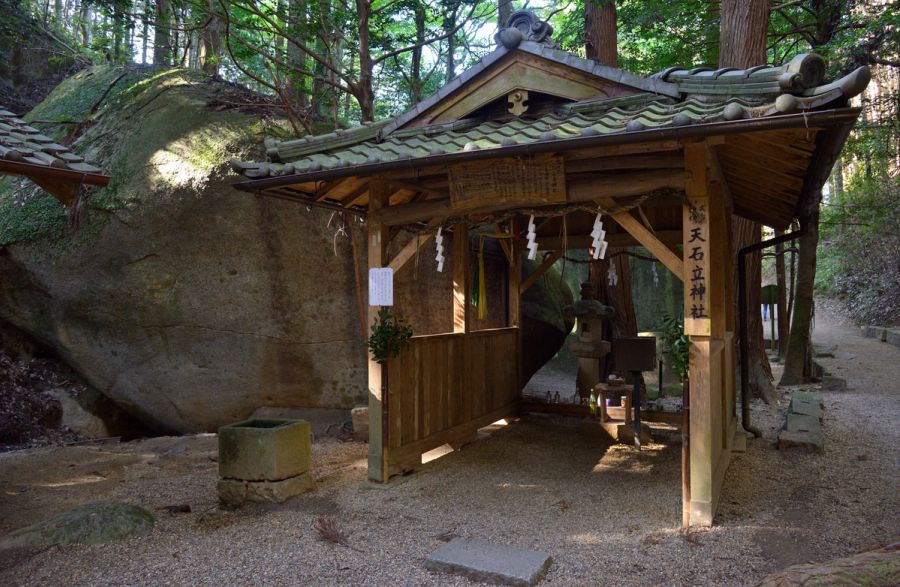
About Amanoiwatate Shrine
Amanoiwatate Shrine sits in a mountain valley in Nara City, Nara Prefecture. Unlike most Japanese shrines, it has no main hall — no building dedicated to enshrining a deity. Here, the massive boulders rising from the forest floor are themselves worshipped as sacred objects. A tranquil site that preserves an ancient form of nature worship.
Boulders Tied to Japanese Mythology
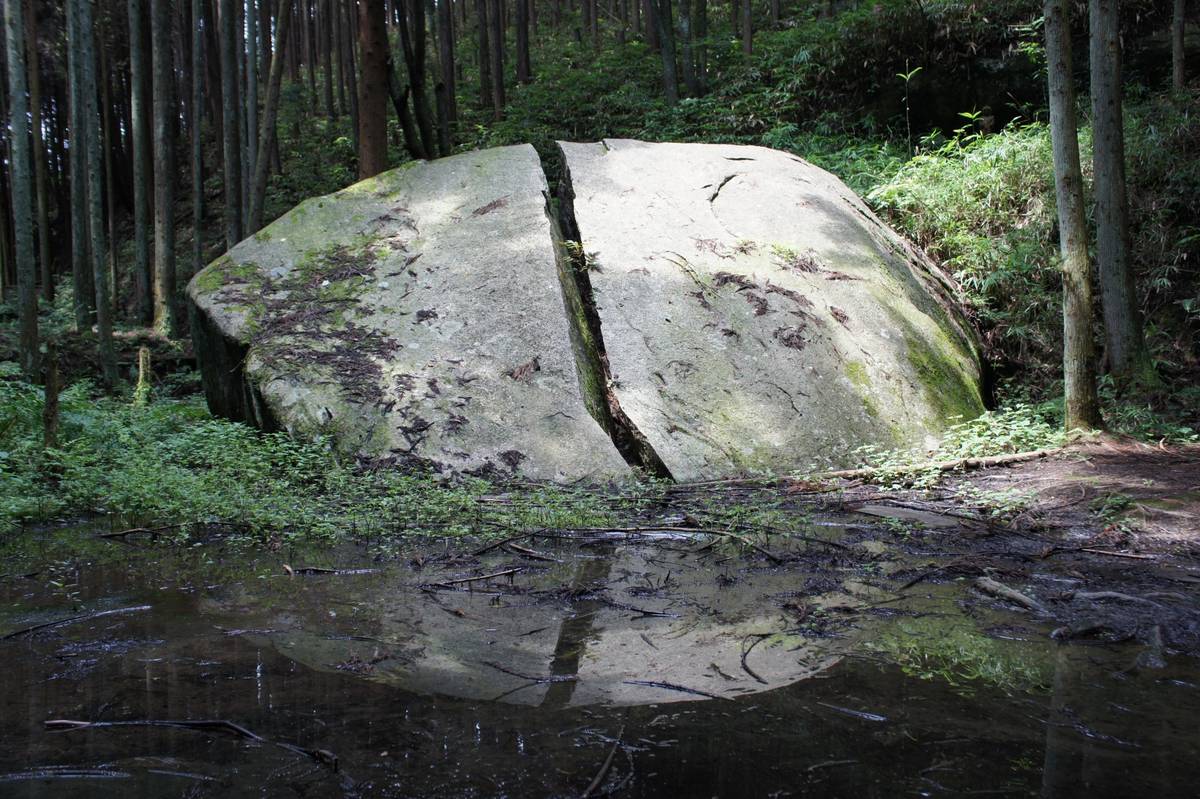
Itto-seki
The shrine’s goshintai — the sacred object believed to house the spirit of a god — is a towering boulder several meters tall. This rock is closely linked to one of the most famous legends in Japanese mythology: the tale of Ama-no-Iwato, the Heavenly Rock Cave.
According to the myth, Amaterasu Ōmikami, the sun goddess, withdrew into a cave of rock, and the world was plunged into darkness. The yaoyorozu no kami (in Japanese belief, spirits dwell in all things in nature, and their number is beyond counting) put their heads together. Ame-no-Uzume, the goddess of entertainment, performed a lively dance before the cave entrance. When Amaterasu, curious about the commotion outside, peered out, the mighty god Ame-no-Tajikarao wrenched the stone door open, and light returned to the world.
The great boulder at Amanoiwatate Shrine is said to be the very door that Ame-no-Tajikarao hurled away. Other large rocks are scattered around the site, each believed to house its own deity.
Training Ground of the Yagyū Swordsmen
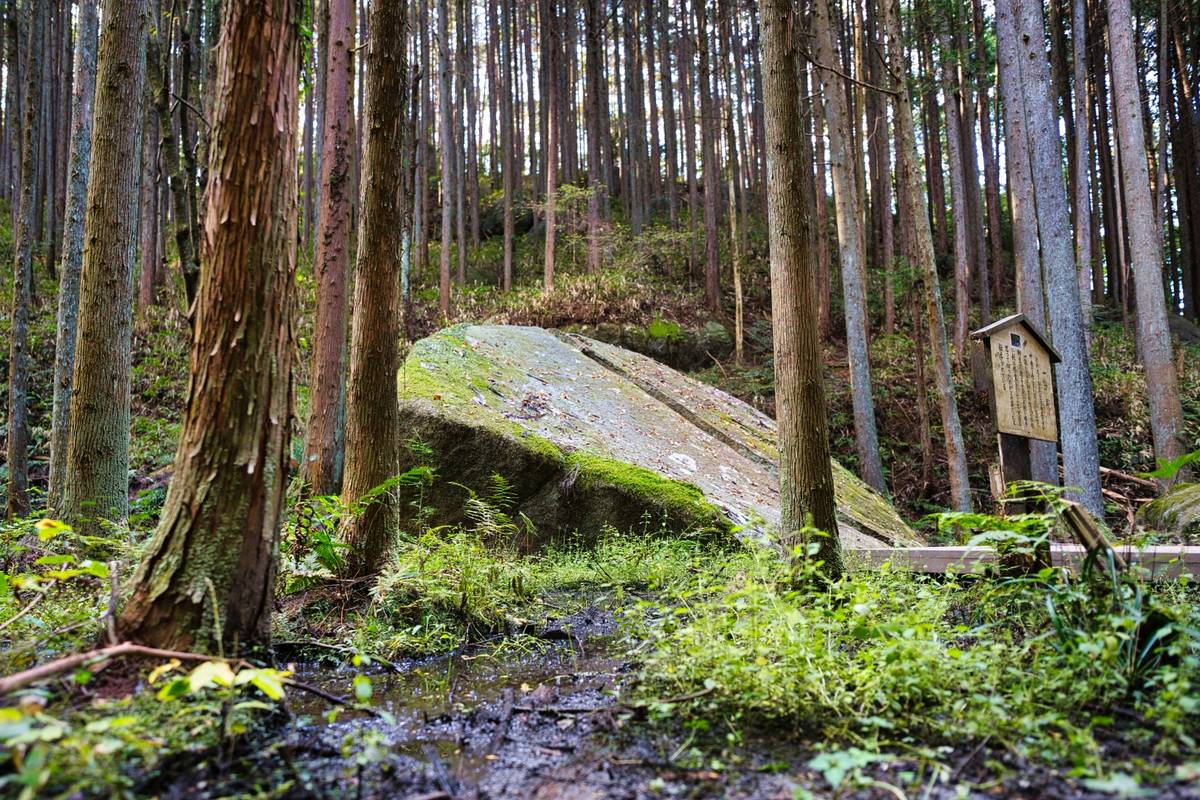
The area around the shrine also served as a training ground for the Yagyū clan, a family of swordsmen who rose to prominence in the 16th and 17th centuries. The Yagyū established a school of swordsmanship known as Yagyū Shinkage-ryū, eventually becoming sword instructors to the shōguns of the Edo shogunate.
A striking legend surrounds the clan’s founder, Yagyū Muneyoshi, also known as Sekishūsai. For three years, Muneyoshi is said to have trained here every night against a tengu, a long-nosed, winged creature of Japanese folklore believed to dwell deep in the mountains. One night, convinced he had struck the tengu down with a single blow, he looked at his feet to find a massive boulder split clean in two. This rock, known as the Ittō-seki (the One-Sword Stone), still stands about 50 meters beyond the shrine.
A Pilgrimage Spot for Demon Slayer Fans
The Ittō-seki has also become a pilgrimage spot for fans of the manga and anime series Demon Slayer: Kimetsu no Yaiba. The story follows a boy whose family is killed by man-eating demons as he trains to fight them, and it became a worldwide phenomenon after its anime adaptation debuted in 2019.
Early in the story, the protagonist Kamado Tanjirō trains under his master Urokodaki Sakonji, who wears a tengu mask. As a culmination of his training, he slices a boulder taller than himself in two with his sword.
The resemblance between that boulder and the Ittō-seki, combined with the echoes of Sekishūsai’s legend of training against a tengu, has turned the shrine into a popular destination for fans.
〒630-1237 789 Yagyūchō, Nara
Loading map...
Last Updated: