Nara
奈良県
Start here
What to know about Nara
Numerous Famous Temples and Shrines
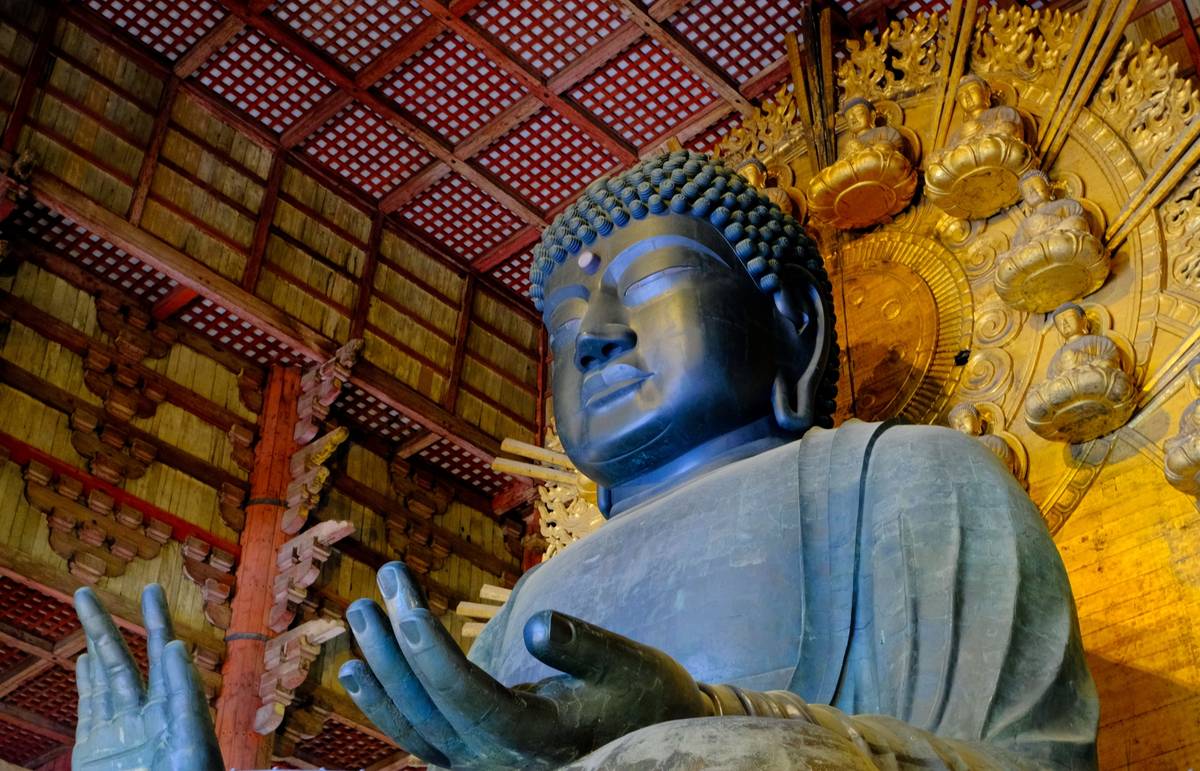
The Great Buddha in Todaiji Temple / Photo AC
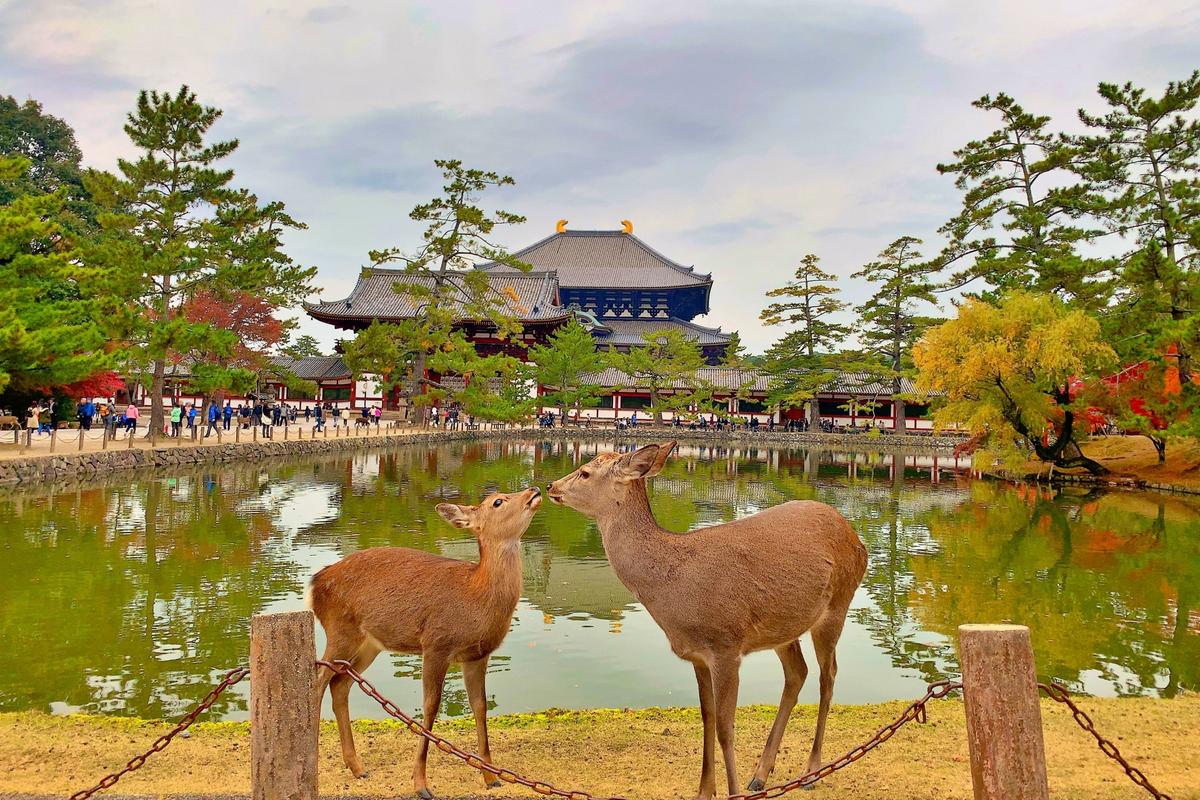
Nara Prefecture is home to many temples and shrines that are renowned throughout Japan.
Representative examples include Tōdai-ji, known for its Great Buddha statue that stands about 15 meters tall; Hōryū-ji, whose five-story pagoda symbolizes the world’s oldest surviving group of wooden buildings; and Kasuga Taisha, the head shrine of roughly 3,000 Kasuga shrines nationwide, famous for its vermilion-painted shrine buildings and the approximately 3,000 lanterns that line its grounds.
Being able to deeply feel Japan’s history and culture through these historic structures is one of Nara Prefecture’s greatest attractions.
Three World Heritage Sites
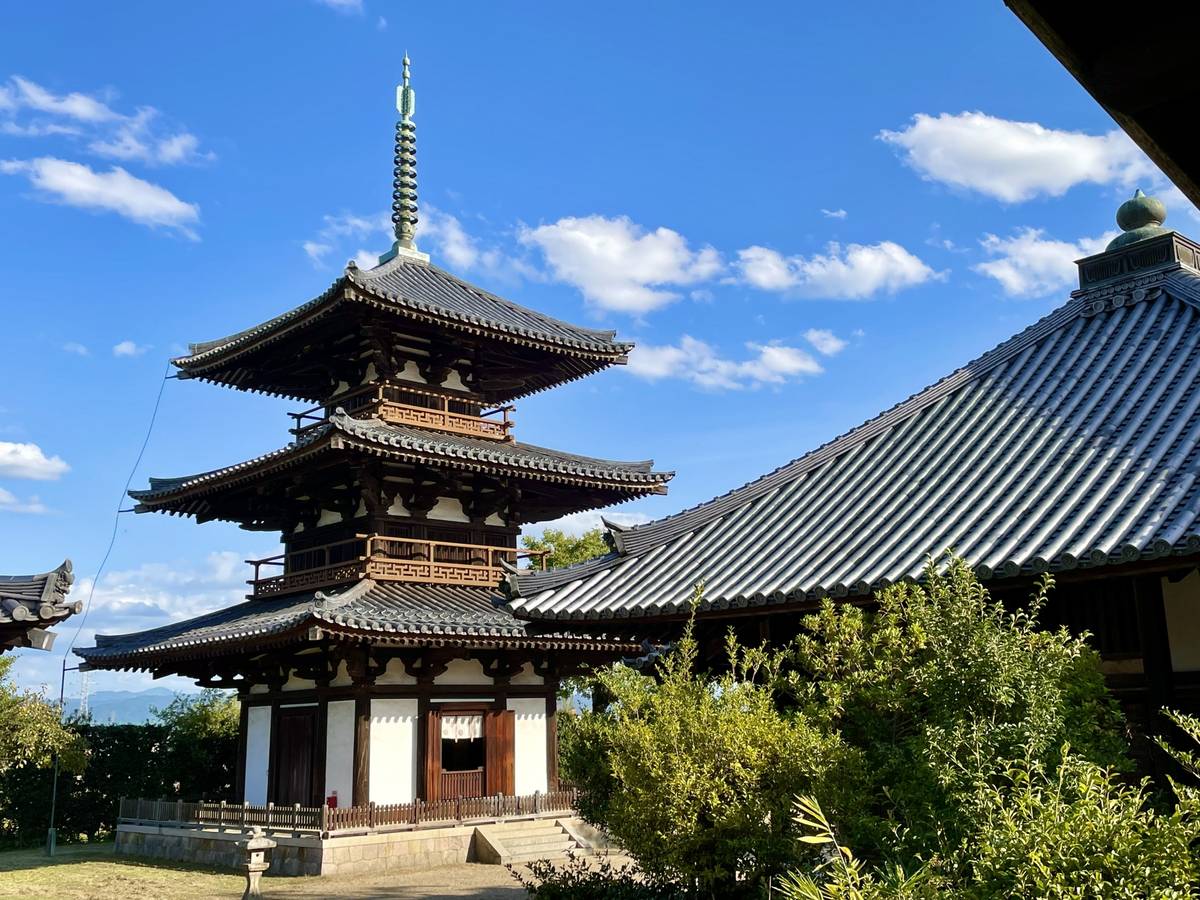
Hokiji Temple in Horyuji Temple / Photo AC
Nara Prefecture has three properties inscribed as UNESCO World Cultural Heritage Sites.
The first is the “Buddhist Monuments in the Hōryū-ji Area.” In 1993, together with Himeji Castle in Hyōgo Prefecture, it became one of the first sites in Japan to be registered as a World Cultural Heritage Site.
The second is the “Historic Monuments of Ancient Nara,” registered in 1998. It consists of the following group of cultural properties, including temples, shrine grounds, castle remains, and natural environments:
- Tōdai-ji
- Kasuga Taisha
- Kōfuku-ji
- Gangō-ji
- Tōshōdai-ji
- Yakushi-ji
- Kasugayama Primeval Forest
- The Site of Heijō-kyō
The third is the “Sacred Sites and Pilgrimage Routes in the Kii Mountain Range,” which spans the three prefectures of Nara, Mie, and Wakayama, and was registered as a World Cultural Heritage Site in 2004.
Deer in Nara, a National Natural Monument
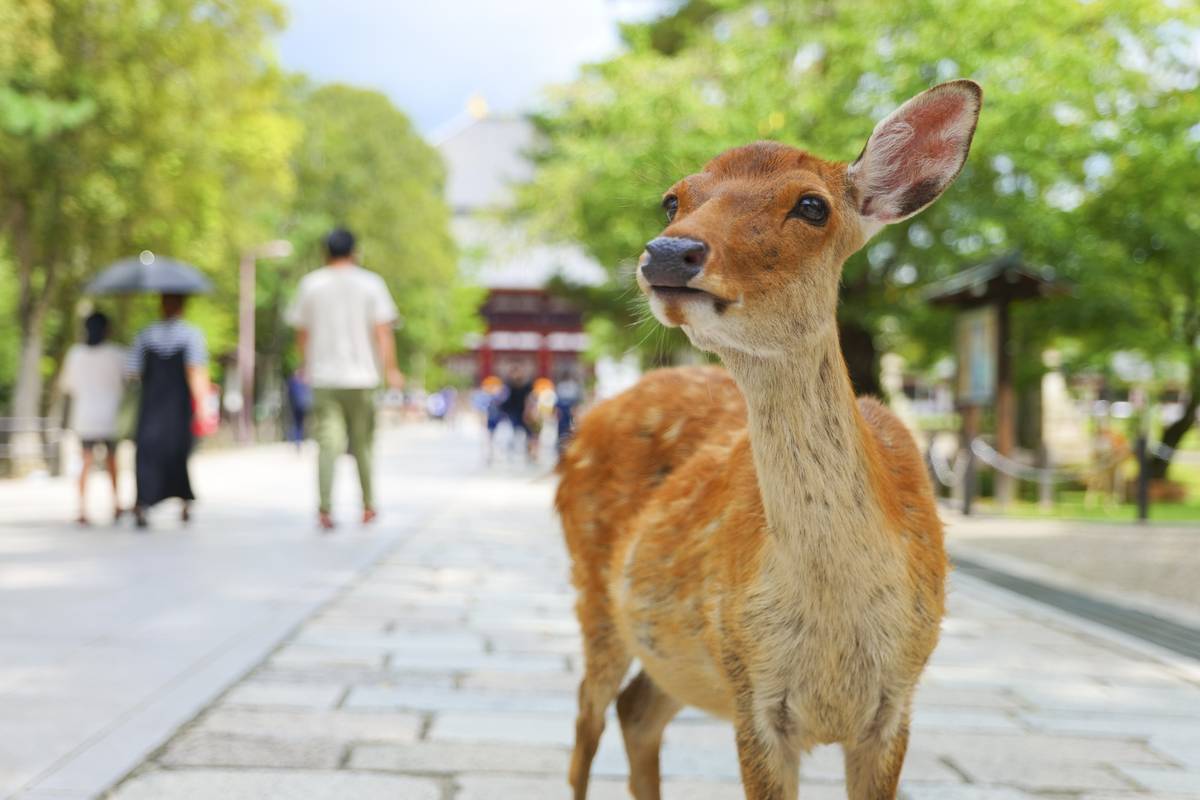
A deer in Nara / Photo AC
Around Nara Park in Nara Prefecture, about 1,300 wild deer live and roam freely.
Nara’s deer were designated a National Natural Monument in 1957 and have long been carefully protected as shinka (divine messengers of the gods) of Kasuga Taisha. As a result, even today you can see a unique landscape where people and deer coexist.
It is not uncommon for deer to cross the roads, and in such cases, it is customary in Nara for cars to give priority to the deer.
There are many stalls around Nara Park that sell special deer crackers, and visitors can enjoy feeding the deer. It is one of the must-try local experiences when visiting Nara.
Protecting Small Lives
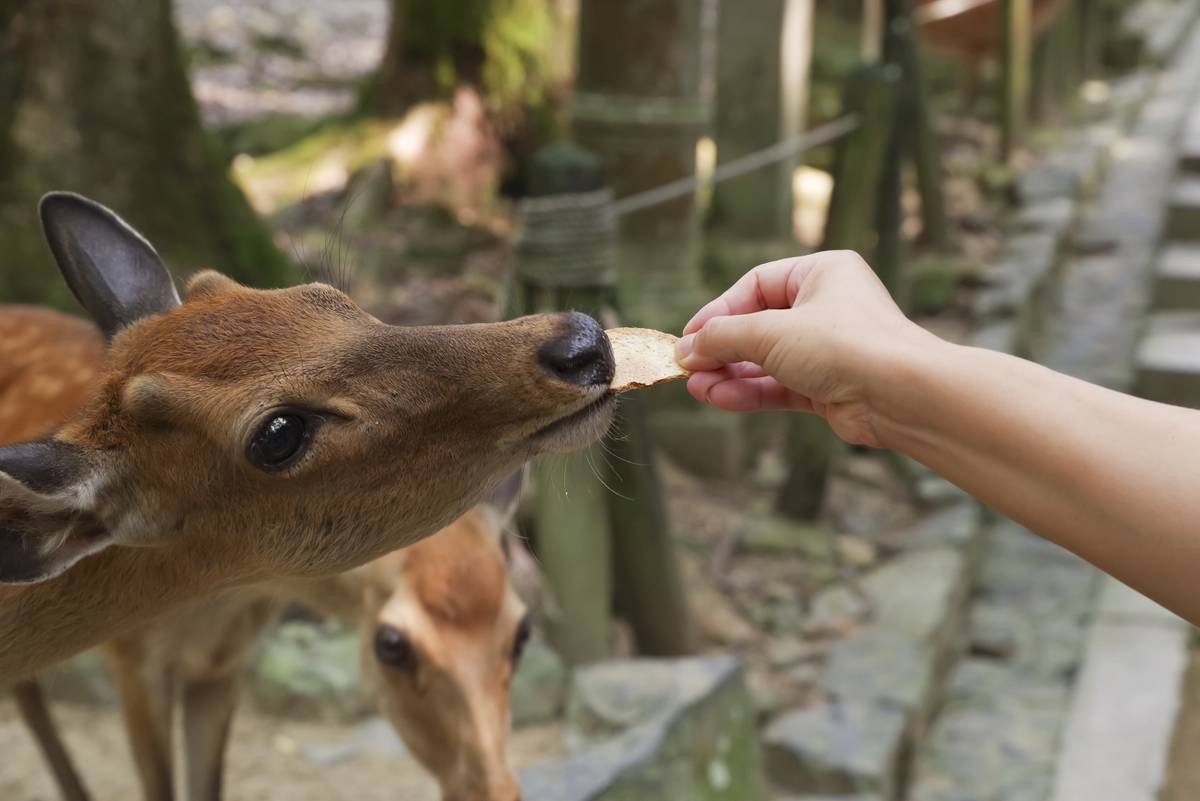
Feeding Deer Senbei / Photo AC
While feeding the deer is a popular activity, there have also been a series of accidents in which deer have died after eating human food or litter that has been carelessly thrown away by visitors from Japan and abroad.
The deer of Nara are sacred animals in the local religious tradition, and beyond that, they are precious living beings.
Please feed them only the designated deer crackers, and be sure to dispose of any trash in nearby bins or take it back with you to your accommodation, so that you can help protect their lives.
Where to go
Places to visit in Nara
Curated spots and experiences across Nara.
Shrines & Temples
1 place
Nature
1 place


Location
Where is Nara?
Nara Prefecture is one of the prefectures that make up the Kinki region, which consists of two urban prefectures and five prefectures, and it also belongs to the Kansai region, which is composed of two urban prefectures and four prefectures, excluding Mie Prefecture. The prefectural capital is Nara City.
In the central and southern parts of the prefecture, the Kii Mountain Range spreads out, and due to the influence of this terrain, the actually habitable area where people can live is said to be the smallest among Japan’s 47 prefectures. For this reason, more than about 90% of Nara Prefecture’s population is concentrated in the northwestern part of the prefecture. On the other hand, because Nara Prefecture encompasses the Kii Mountain Range, it is also a region blessed with a rich natural environment, and in the southern part of the prefecture there are many nature-based leisure spots that make use of the mountains and rivers.
Nara Prefecture borders Mie Prefecture to the east, Osaka Prefecture to the west, Kyoto Prefecture to the north, and Wakayama Prefecture to the south, and is one of Japan’s eight inland prefectures among the 47 that do not face the sea. The climate is characterized by an annual average temperature that is almost the same as the national average, relatively low precipitation, and overall comfortable living conditions.
However, in areas such as Gojo City, Uda City, and Yoshino Town, snowfall and snow accumulation can be seen in winter, and several times a year this can affect transportation.
Loading map...
Access
Getting to Nara
Since there is no airport in Nara Prefecture, visitors coming from overseas generally use Kansai International Airport in Osaka Prefecture. From the airport to Nara Prefecture, you can access the area by limousine bus or train.
The limousine bus goes directly to JR Nara Station and Kintetsu Nara Station, taking about an hour and a half. Because no transfers are required, it is convenient for first-time visitors to Nara or those with a lot of luggage. If you take the train, you can also reach Nara in about an hour and a half by transferring between JR or Nankai Railway and Kintetsu Railway.
Tourist spots within Nara City can be visited by train or bus, but when visiting mountainous or nature areas, you may need to use a taxi.
Local pride
Specialty Products
Nara Prefecture is an inland prefecture with no coastline, but it is home to expansive areas of rich natural scenery, blessed with mountains and rivers. In addition, because the climate is relatively stable throughout the year, it provides an environment well suited to growing agricultural products such as rice, fruit, and vegetables.
Although, as an inland prefecture, Nara does not have a strong association with marine products, it has, on the other hand, given rise to local dishes that make use of its geographical characteristics, such as kakinoha-zushi, in which fresh fish is preserved by salting and wrapping it in persimmon leaves.
Turning to handicrafts, there are many traditional crafts that have been cultivated over a long history, including Nara brushes, Nara ink sticks, and ittobori wood carvings, and their names are still known throughout Japan today.
Food
Crafts & Others
Through the ages
History of Nara
Nara Prefecture was first established in 1868. It was later renamed Nara-fu (Nara Municipality), but two years later it once again became Nara Prefecture.
However, in 1876, Nara Prefecture was incorporated into Sakai Prefecture (now part of Osaka Prefecture) and temporarily ceased to exist. Furthermore, in 1881, Sakai Prefecture was also incorporated into Osaka Prefecture.
After that, a movement to re-establish Nara Prefecture arose, led by people centered in what is now Yamato-Koriyama City, and in 1887 Nara Prefecture was re-established, taking on its present form.
Nara Prefecture has also played an important role in Japan’s ancient history. After Asuka-kyo and Fujiwara-kyo served as capitals, Heijo-kyo functioned as Japan’s capital for 74 years from 710 to 784, flourishing as the political and cultural center of the country.
Continue exploring
Discover other areas and hidden gems across Kinki Region.