Dejima
出島町
Things to Do in and Around Dejima
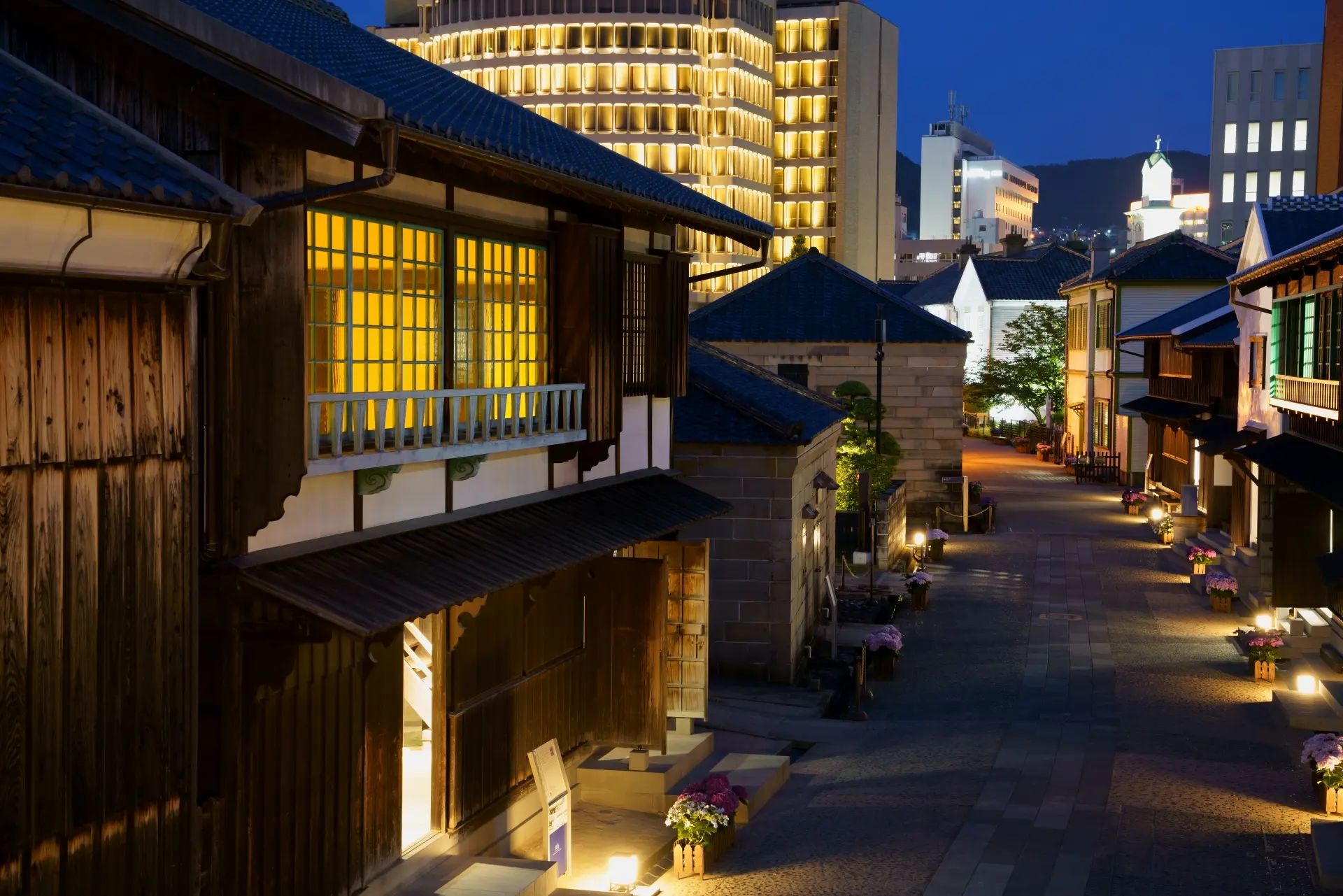
Dejima is a historic district facing Nagasaki Port, known for its exotic atmosphere where Dutch people lived during the Edo period. At the restored Dejima Dutch Trading Post, you can experience the lifestyle of that time, and nearby restaurants offer a taste of Nagasaki's traditional food culture.
Where is Dejima?
Dejima Town is located in the center of Nagasaki City, facing Nagasaki Port, and the entire area has a historical charm. It is bordered by Oura Town to the north, Higashiyamate and Minamiyamate districts to the east, and Minami-Oura Town to the south. During the Edo period, it functioned as the only trading port with the West in Japan, but it is now integrated with the mainland due to land reclamation. Nearby are Nagasaki City's tourist attractions such as Megane Bridge and Chinatown, and it is conveniently within walking distance from the city center.

Getting Around
Trams are convenient for reaching Dejima Town from within Nagasaki City. It's a 1-minute walk from the "Dejima" tram stop. It's about a 15-minute walk from JR Nagasaki Station, or about 5 minutes by tram. From Nagasaki Airport, it takes about 45 minutes by airport limousine bus to Nagasaki Station. Exploring Dejima Town on foot is recommended.
Loading map...
About Dejima
Within the isolation policy of the time, a Dutch trading post was established, and only a limited number of foreigners were allowed to stay in this special place. This small fan-shaped town played an important role in connecting Japan with the West for about 200 years.
Currently, development is underway to restore the townscape of that time, and it has become an area where you can experience historic buildings and streets. Inside the buildings that recreate Edo-period Dejima, you can observe the lifestyle and trade goods of the time.
The Role of Dejima in Japan's Modernization
Western science, technology, and medicine that entered through Dejima had a significant impact on Japan's modernization. Particularly, Western studies known as "Rangaku" spread nationwide from here. Doctors, including Siebold, taught Western medicine to Japanese people, and this knowledge contributed to the development of Japanese medical care.
A Hub of Cultural Exchange
In Dejima, there was also active exchange of food culture. Current Nagasaki specialties such as "Castella" and "Champon" were dishes born from this exchange. It is also said that Japan's first beer and coffee were introduced through Dejima.
At the Dejima Museum, items and documents exchanged at the time are exhibited, allowing you to learn about the history of cultural exchange.
Modern Dejima
In restored Dejima, historical events are regularly held. Trying on Dutch costumes and workshops recreating the lifestyle of the time are popular. Especially during nighttime illuminations, you can experience a fantastical atmosphere as if you have slipped back in time to the Edo period.
Nearby Attractions
Within walking distance from Dejima, there are tourist spots that tell the history of Nagasaki, such as Glover Garden and Oura Church. By touring these, you can experience Japan's transition from isolation to opening up in a day, which is a feature of the area around Dejima.
It is conveniently located just a short distance from the "Dejima" station of the Nagasaki Electric Tramway, making it a convenient starting point for sightseeing.