Ishikawa
石川県
Start here
What to know about Ishikawa
Kanazawa, the castle town built on the wealth of the Kaga Domain, and the Noto Peninsula, jutting far out into the Sea of Japan. Ishikawa Prefecture is a place where centuries of history, traditional craftsmanship, and the beauty of all four seasons come together. What sets it apart is that urban refinement and the peninsula's unspoiled landscapes can both be savored in a single trip.
Kenroku-en Garden
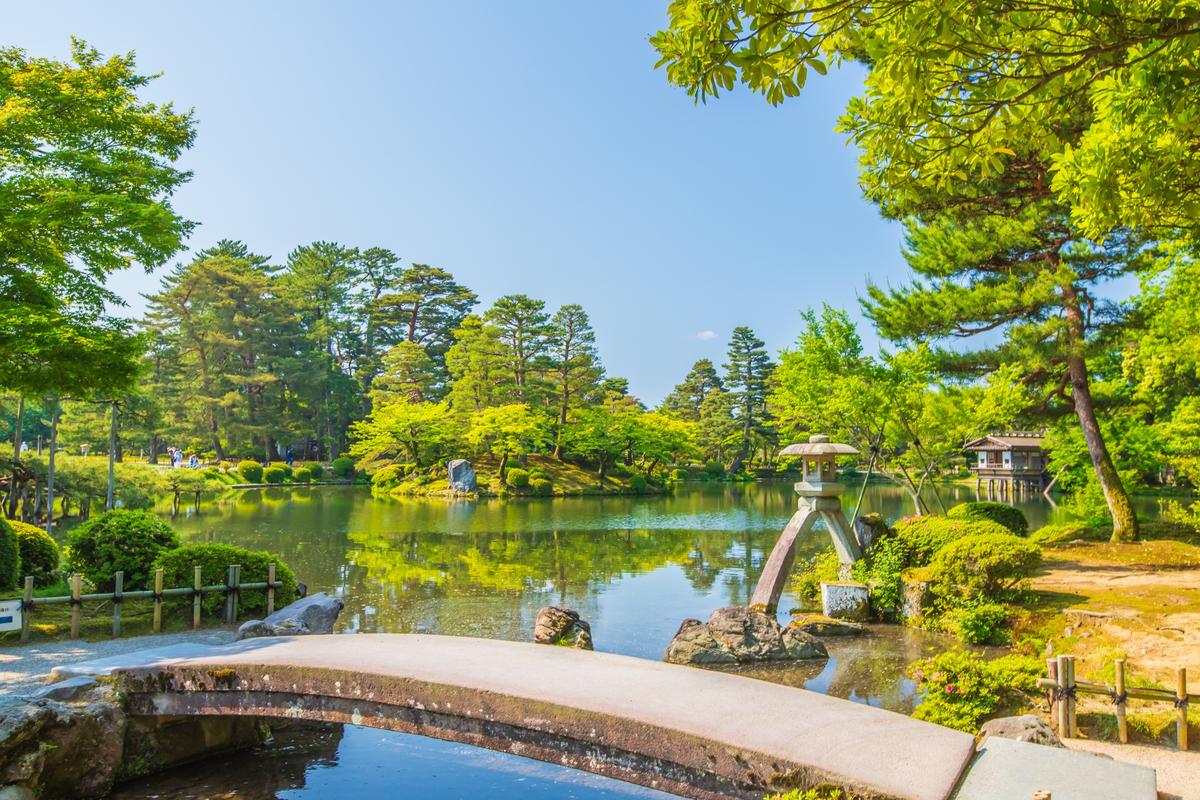
Kenroku-en, spreading across the heart of Kanazawa, is one of Japan's Three Great Gardens alongside Kairaku-en in Mito and Kōraku-en in Okayama. Covering roughly 11.4 hectares, it was shaped over many generations by the successive lords of the Kaga Domain during the Edo period.
The garden's best-known landmark is the Kotoji-tōrō, a distinctive two-legged stone lantern. Its reflection in the nearby Kasumigaike Pond is the most iconic image of Kenroku-en, frequently seen on postcards and photographs. Pines, cherry trees, and plum trees surround the pond, and the scenery shifts with every turn along the walking paths.
In winter, yukitsuri ropes are strung in conical patterns from the treetops to protect branches from the weight of heavy snow. The geometric silhouettes of rope against snow-laden trees are a seasonal hallmark of Hokuriku winters. Cherry blossoms in spring, deep green in summer, crimson foliage in autumn. No matter the season, the garden reveals a different face.
Kanazawa's Castle Town
Kanazawa is one of the few Japanese cities that escaped wartime bombing, and its Edo-period streetscapes remain remarkably intact. The town that grew around the castle carries a distinctive atmosphere where samurai culture and merchant culture intersect.
Kanazawa Castle Park
This park occupies the former grounds of Kanazawa Castle, seat of the Maeda clan of the Kaga Domain. The Hishi-yagura turret and the Gojikken Nagaya storehouse, reconstructed in 2001, are white-walled structures rebuilt using traditional timber-frame techniques. Inside, visitors can observe the nail-free joinery up close. The park faces Kenroku-en across a road, and strolling through both together is the classic route.
Higashi Chaya District
Kanazawa's most celebrated chaya district, where machiya townhouses with wooden lattice doors line a stone-paved street. It was established in 1820 under a directive from the Kaga Domain. The buildings' distinctive crimson latticework preserves the atmosphere of the teahouses where geisha once honed their art. Today some teahouses open their interiors to visitors, while others serve as wagashi (traditional sweets) shops, cafés, and craft galleries.
Nagamachi Samurai District
West of Kanazawa Castle lies the former residential quarter of mid-ranking samurai. Earthen walls and water channels line quiet lanes that evoke daily life in the old castle town. At the Nomura Samurai Residence, visitors can view the period floor plan and garden. The garden received a two-star rating in the Michelin Green Guide and is well worth a visit.
Noto Peninsula
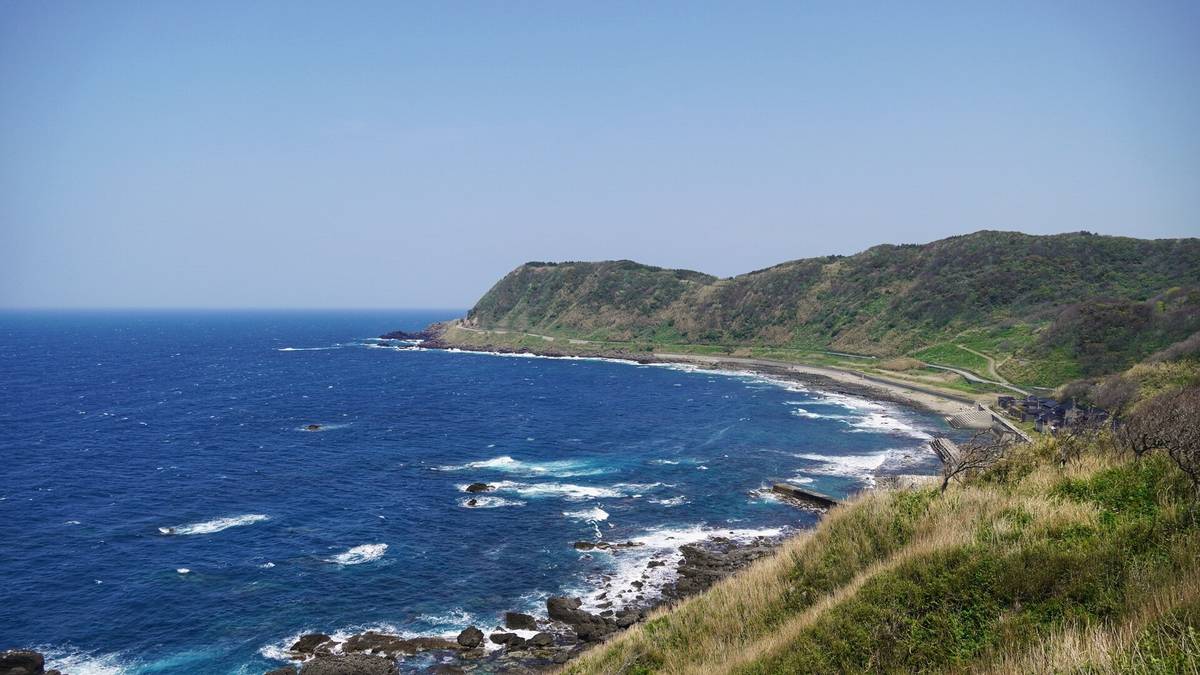
Stretching north of Kanazawa, the Noto Peninsula is an area of rugged coastline and tranquil farming villages. The landscape, where traditional agriculture, forestry, and fishing merge with nature, was designated a Globally Important Agricultural Heritage System (GIAHS) in 2011. Here, time seems to move at a gentler pace than in the city.
Chirihama Nagisa Driveway is the only beach road in Japan where cars and buses can drive along roughly 8 km of sand. The fine-grained sand absorbs seawater and packs firm enough for vehicles to run right beside the breaking waves. Route buses also travel the driveway, so visitors who are not driving can enjoy this unusual sight from a bus window.
The Wajima Morning Market, held in the city of Wajima, is an open-air market said to date back over 1,000 years. Along a roughly 200-meter street, stalls sell fresh fish, dried seafood, vegetables, lacquerware, and more, and chatting with the friendly local vendors is part of the experience. The market runs from around 8 a.m. to noon and offers an immersive taste of Noto's way of life and food culture.
Shiroyone Senmaida is a scenic spot where 1,004 small rice paddies cascade down a steep slope overlooking the Sea of Japan. Each paddy is too small for machinery, so they are still tended entirely by hand. During rice-planting season in May, the flooded terraces mirror the sky and sea. From October through March, an illumination event called Aze no Kirameki lights up the paddies with LEDs.
Gold Leaf and Traditional Craft Experiences
Kanazawa produces roughly 99% of all gold leaf made in Japan. Around the Higashi Chaya District and Kanazawa Station, a number of workshops offer hands-on gold-leaf application experiences. Decorating chopsticks, small boxes, or accessories with gold leaf yourself is a popular activity among international visitors.
Kinpaku Ice Cream
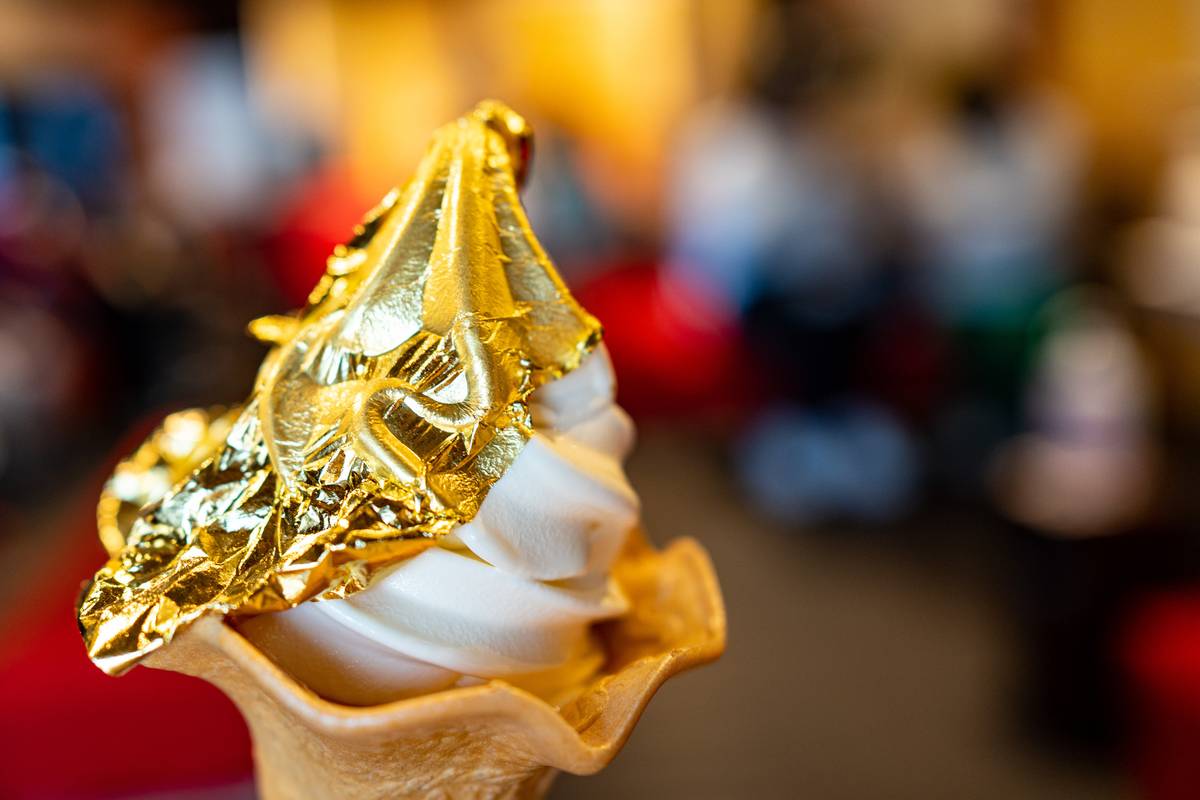
Gold-leaf foods have also become a Kanazawa specialty. The standout is gold-leaf soft-serve ice cream, where an entire sheet of gold leaf is draped over the cone for dramatic visual impact and plenty of social-media buzz. It tastes like ordinary soft-serve, but the sheer novelty of eating something glittering with gold is what makes it fun.
Beyond gold leaf, workshops around the city offer hands-on programs in other traditional crafts such as Kutani ware painting and Kaga Yūzen coloring. Watching artisans at work up close and finishing a piece with your own hands is a deeper cultural experience than any souvenir shop can provide.
Where to go
Places to visit in Ishikawa
Curated spots and experiences across Ishikawa.

Zoom in
Areas in Ishikawa
Neighborhoods and districts to explore

Location
Where is Ishikawa?
Ishikawa Prefecture is in the north-western central part of Honshu, facing the Sea of Japan, and belongs to the Chubu (Hokuriku) region. Its capital is Kanazawa.
It borders Toyama to the east, Fukui to the south, and Gifu to the southeast. On the map, it sits on Honshu’s Sea of Japan coast (the opposite side from Tokyo’s Pacific coast) and lies roughly north to northwest of the Kansai and Chubu metropolitan areas.
The Kanazawa area has many historic buildings and serves as a major transportation and sightseeing hub for Hokuriku.
Loading map...
Access
Getting to Ishikawa
Ishikawa's main air gateway is Komatsu Airport. Flights from Tokyo's Haneda Airport arrive in about one hour, and a limousine bus connects the airport to Kanazawa Station in roughly 40 minutes.
By rail, the Hokuriku Shinkansen is the most convenient option. The fastest Kagayaki service covers the Tokyo–Kanazawa route in about two and a half hours. In March 2024, the line was extended to Tsuruga Station in Fukui Prefecture, further broadening access along the corridor. From the Osaka area, the typical route is to take the Limited Express Thunderbird to Tsuruga and transfer to the Hokuriku Shinkansen for Kanazawa, with a total journey time of around two hours and 40 minutes.
For getting around Kanazawa, the Kanazawa Loop Bus is a convenient option. It departs from Kanazawa Station and circulates past major attractions including Kenroku-en Garden and the Higashi Chaya District, with a one-day pass available. Hokuriku Railroad city buses and taxis also cover the urban area, so sightseeing by public transit alone is entirely feasible.
The Noto Peninsula can be reached by the Noto Railway or route buses. Scheduled sightseeing buses that visit major tourist spots in a single tour are also available, making them a practical option for those who want to see the highlights of Noto efficiently.
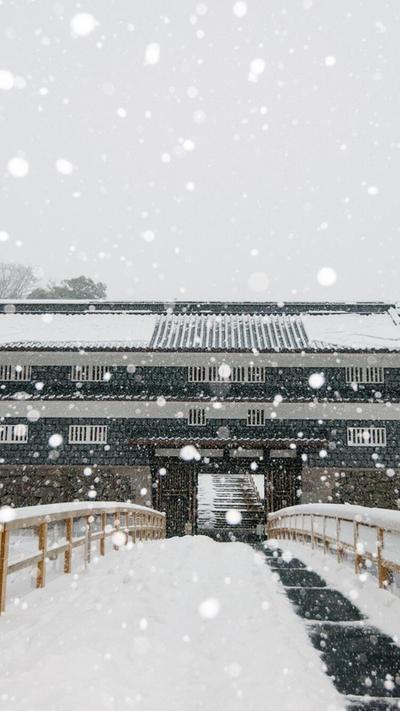
Winter weather in Hokuriku requires some preparation. From December through February, snow can accumulate even within Kanazawa city, so packing waterproof footwear and warm clothing is recommended.
Local pride
Specialty Products
Ishikawa faces the Sea of Japan, and the Noto Peninsula juts far out into the water, creating rich fishing grounds. Where the warm Tsushima Current meets colder waters, a diverse catch of seafood is landed with each season. Inland, the Kaga Plain is fertile farmland where high-quality rice and heirloom vegetable varieties have been cultivated for generations.
The high humidity and heavy snowfall typical of the Hokuriku region have created ideal conditions for sake brewing and fermented foods. Ishikawa is also one of Japan's foremost centers for traditional crafts, including lacquerware, ceramics, textile dyeing, and gold-leaf work. With ocean bounty, agricultural riches, and skilled artisanship all in one place, the prefecture stands out for both its food culture and its craft heritage.
Food
Crafts & Others
Through the ages
History of Ishikawa
Ishikawa’s history spans the former provinces of Noto and Kaga. In the late medieval era, Buddhist leagues called the Ikkō-ikki briefly established self-rule. During the Warring States period, Oda Nobunaga’s forces advanced and his retainer Maeda Toshiie made Kanazawa his base; under the Maeda clan in the Edo period, the Kaga Domain became one of Japan’s richest “outside” domains, famed as “Kaga Hyakumangoku” (one million koku of rice). This wealth built Kanazawa’s castle town and fostered arts such as gold leaf, Kaga Yuzen dyeing, Kutani porcelain, and tea culture.
After the Meiji Restoration, Ishikawa took shape as a prefecture; maritime trade on the Kitamaebune (northern sea route) and later railways drove textile and machinery industries. Notable figures include warlords Maeda Toshiie and Maeda Toshinaga; philosophers Nishida Kitarō and D.T. Suzuki (Suzuki Daisetsu); novelist Izumi Kyōka; and poet Murō Saisei.
Reading
Stories from Ishikawa
Articles, guides and travelogs about Ishikawa.
Plan your trip
Official Resources
Continue exploring
Discover other areas and hidden gems across Chubu Region.