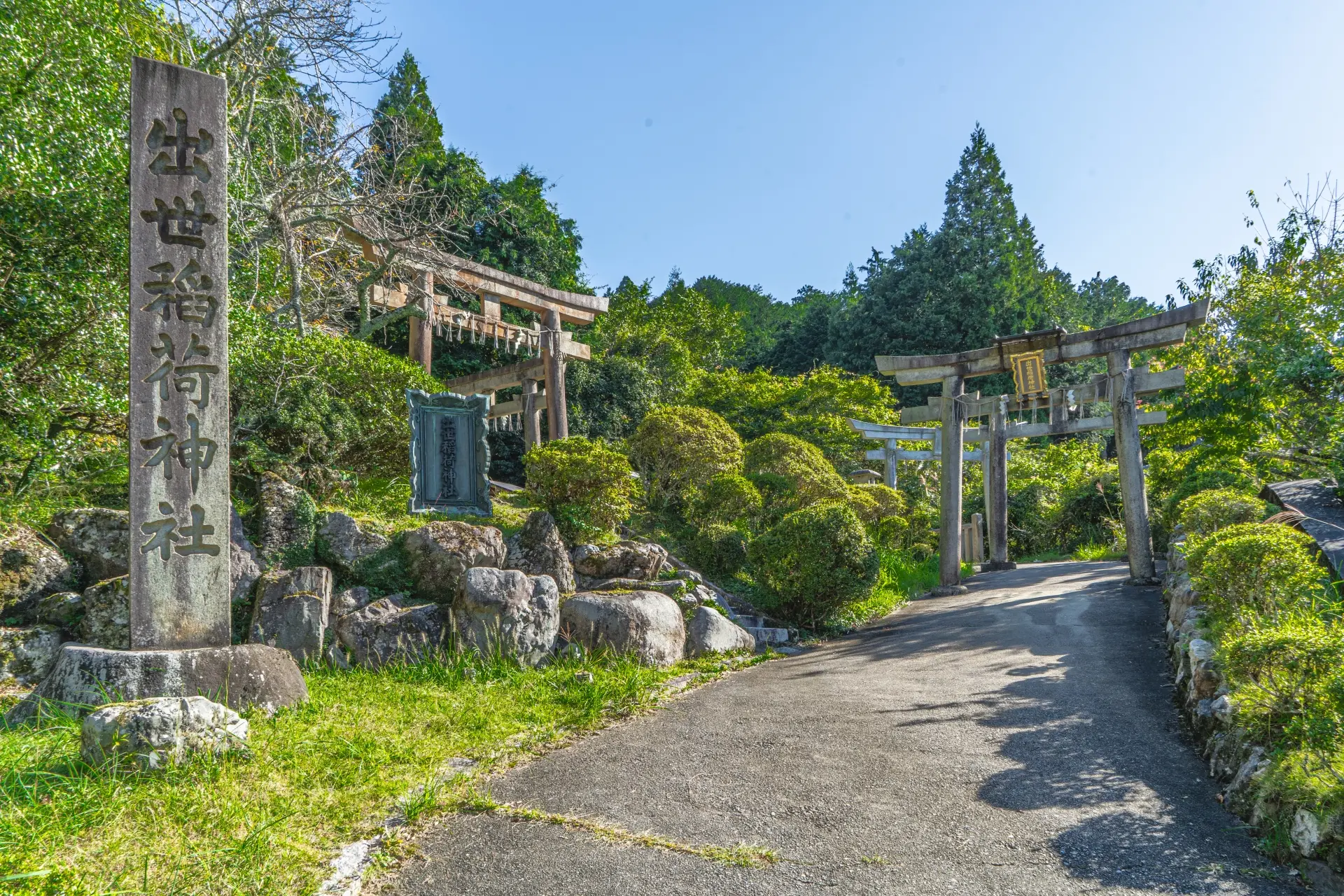
Etiquette When Visiting Shrines and Temples
神社やお寺を訪れる時のマナーや手順
Shrines and temples are highly popular tourist destinations in Japan. You may have many questions, such as the differences between shrines and temples, or how to properly pay your respects. Here, we will provide a simple explanation of the procedures and etiquette for visiting and some points to keep in mind.
Difference Between Shrines and Temples
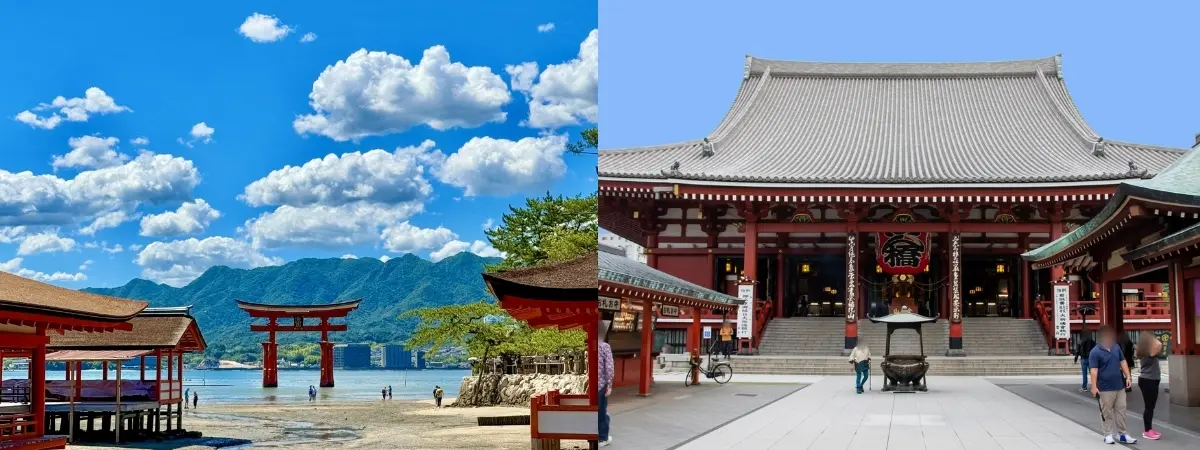
Itsukushima Jinja / Sensoji
Simply put, shrines and temples differ in what they worship. Shrines are religious facilities of Shinto, Japan’s native faith, which venerates nature and local deities. Temples, on the other hand, are Buddhist facilities; a religion that originated in India.
There are also differences in architectural style. Shrines have a torii gate at the entrance, while temples have a mon (main gate). However, in some cases, they cannot be completely distinguished, such as when a shrine and a temple exist within the same grounds.
From the perspective of someone from a monotheistic religion, it might seem strange that shrines and temples stand side-by-side, or that many Japanese people visit both. However, a culture of "Shinbutsu-shugo" (syncretism of Shinto and Buddhism) has been rooted in Japan since ancient times, incorporating Buddhist teachings about the afterlife while also venerating nature and ancestors as kami (gods).
In modern Japan, less people strongly identify with a specific religion, but Shinto and Buddhism remain deeply rooted in daily life as cultural customs. It’s common to visit a shrine for events like a baby’s first shrine visit (omiyamairi), while funerals and grave visits are typically held at temples.
Procedures for Visiting a Shrine
1. Bow Once Before The Torii Gate
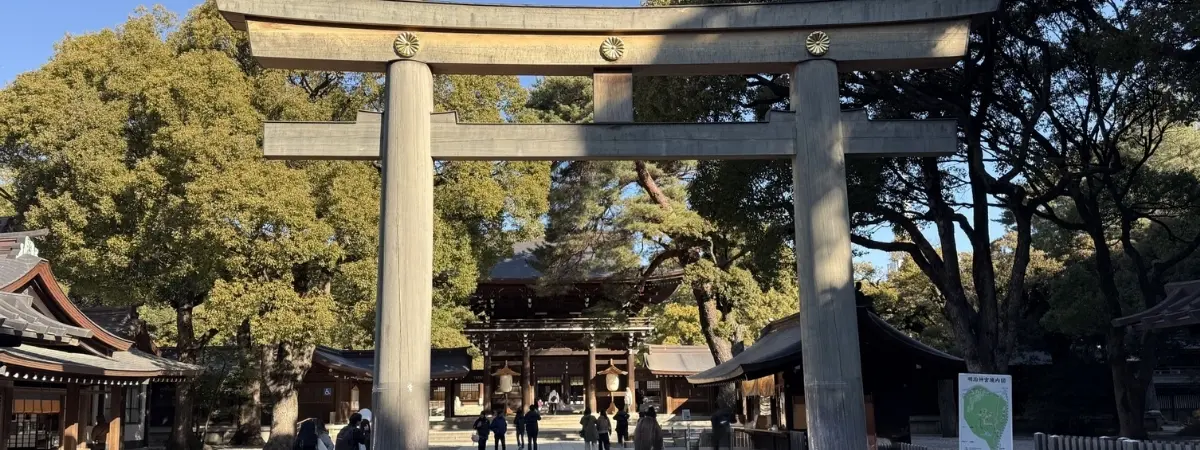
The torii gate at the front of a shrine is said to be a barrier separating the realm of the gods from the place where humans live. Therefore, when passing through the torii, it is preferable to remove hats and other headwear and bow once as a greeting to the kami. However, during festivals or hatsumode (the first shrine visit of the New Year) when it is crowded, stopping can be dangerous. Please act flexibly according to the situation, such as by simply bowing your head slightly while walking.
- The center of the torii is said to be the path for the kami, so you should pass through on either the left or right side.
- After finishing your visit and leaving through the torii, it is customary to turn around and bow to the kami once again.
2. Purify Yourself At The Chozuya
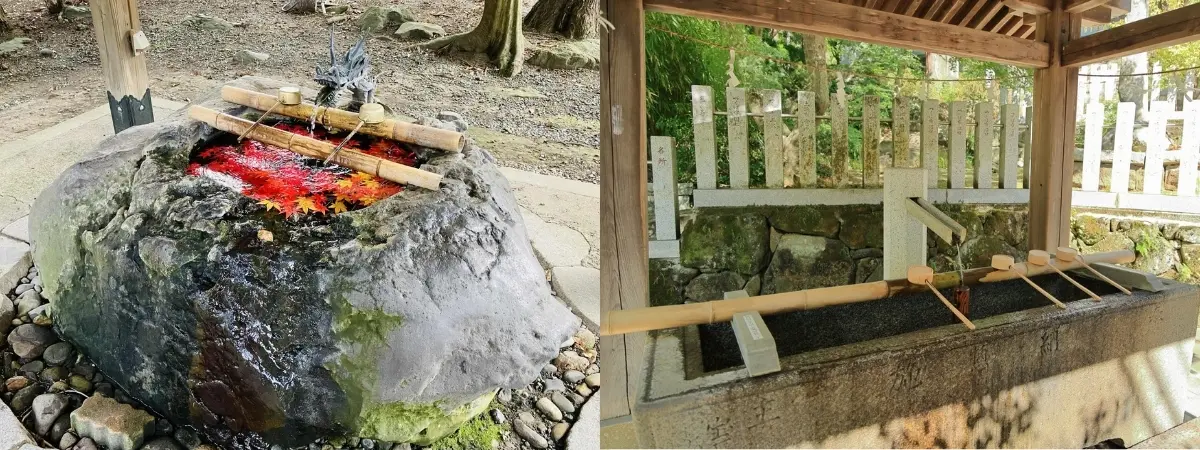
Komagata Shrine / Sensoji Temple
2-1. Scoop Water and Wash Your Left Hand
First, hold the ladle (hishaku) with your right hand, fill it generously with water, and wash your left hand. Scoop the water flowing from the bamboo pipe or dragon-shaped spout, not from the basin (mizubachi) where the water collects. Also, be careful not to let the water you used to wash your hand fall back into the basin.
2-2. Switch Hands and Wash Your Right Hand
Switch the ladle to your left hand and wash your right hand.
2-3. Switch Hands Again and Rinse Your Mouth
Switch the ladle back to your right hand, pour water into your left hand, and rinse your mouth. If you are concerned about hygiene, it is okay to just pretend to rinse. It is forbidden to touch the ladle directly to your mouth or to make noise while rinsing. Also, be careful not to spit the water from your mouth into the basin.
2-4. Cleanse the Handle to Finish
Finally, hold the ladle upright so the remaining water flows down and cleanses the handle. If you stand it up too quickly, you might get your clothes wet, so do it slowly.
3. Prayer Procedure and Etiquette
There are various interpretations regarding the precise etiquette when you pray, but here we’ll introduce the general procedure. At some shrines, instructions may be displayed near the worship hall (haiden); if so, be sure to follow the steps shown there.
3-1. Put in an Offering
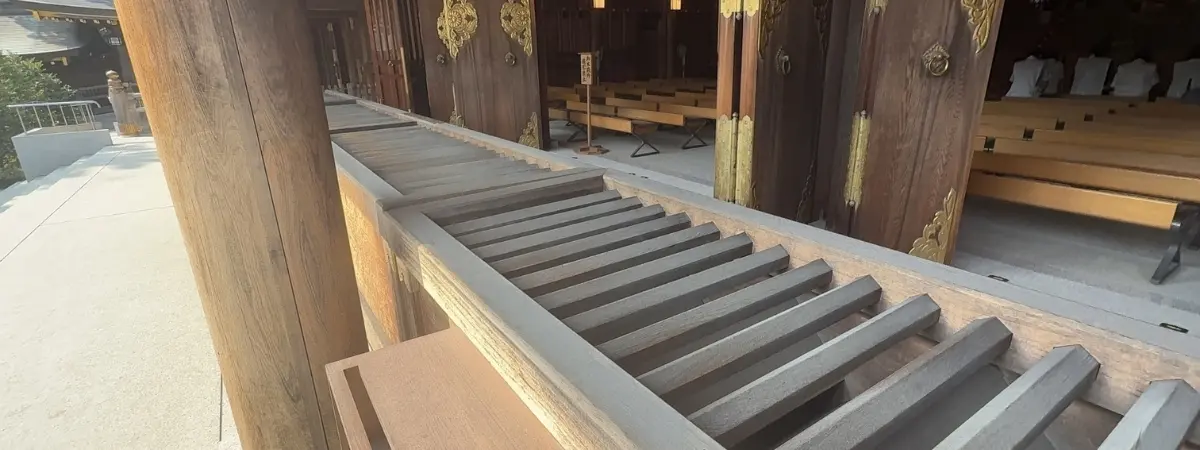
Samukawa Shrine
When you arrive at the hall of worship, put your offering (osaisen) into the offering box. This is not mandatory, and the amount does not make your wishes more likely to come true. It is fine to put in an amount you are comfortable with as a token of gratitude. As a folk charm, people sometimes use puns (goroawase) for good luck, such as 5 yen = go-en (homophonous with 'good connections/fate') or 11 yen = ii en ('good connections'). There are various puns depending on the wish, such as for work luck or success in love, so it might be interesting to look them up.
3-2. Ring The Bell Respectfully
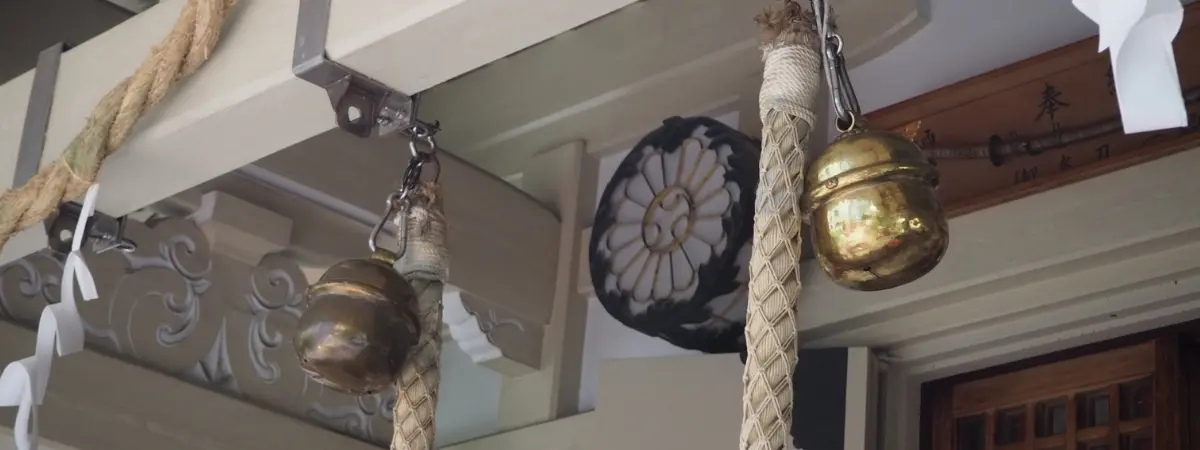
Tsuyunoten Shrine
If there is a bell (suzu), ring it 1 to 3 times. The sound of this bell serves to purify you and, at the same time, acts as a greeting to the kami. It's like a doorbell or a knock, so don't ring it forcefully to make a loud noise; ring it with the intention of giving a polite greeting.
3-3. Two Bows, Two Claps, One Bow
神社本庁制作の作法手順です。日本語ですが、映像を見たり自動翻訳でも十分に理解できます。
- Stand up straight and bow twice. A 90-degree bow is most common, but it’s perfectly fine to adjust based on your physical condition—what matters is sincerity, not perfection.
- Clap your hands twice, then keep your palms together and offer your prayer. This act is known as gankake or kigan (making a wish or prayer), but remember that shrines and temples are places to express gratitude to the gods and buddhas.
Instead of simply asking for personal gain, start by stating your name and address, then express how you plan to act or make efforts toward your wish moving forward.
Finally, convey your gratitude and ask for their guidance and protection.
You may do this silently in your heart or aloud—either is fine. - When you finish, straighten your posture once more and bow deeply to conclude your prayer.
Omikuji, Amulets, and Goshuin - After You Pray
After you have finished praying, you can get omikuji (fortunes), omamori (amulets), and goshuin (shrine/temple stamps). Some people tie bad omikuji fortunes within the grounds, but it is also fine to take them home as advice from the kami. If you do tie it on the grounds, be sure to use the designated place. The trees and ema (votive plaques) on the grounds are sacred, so please do not tie omikuji to them.
Procedures for Visiting a Temple
1. Face the Gate, Put Your Hands Together, and Bow
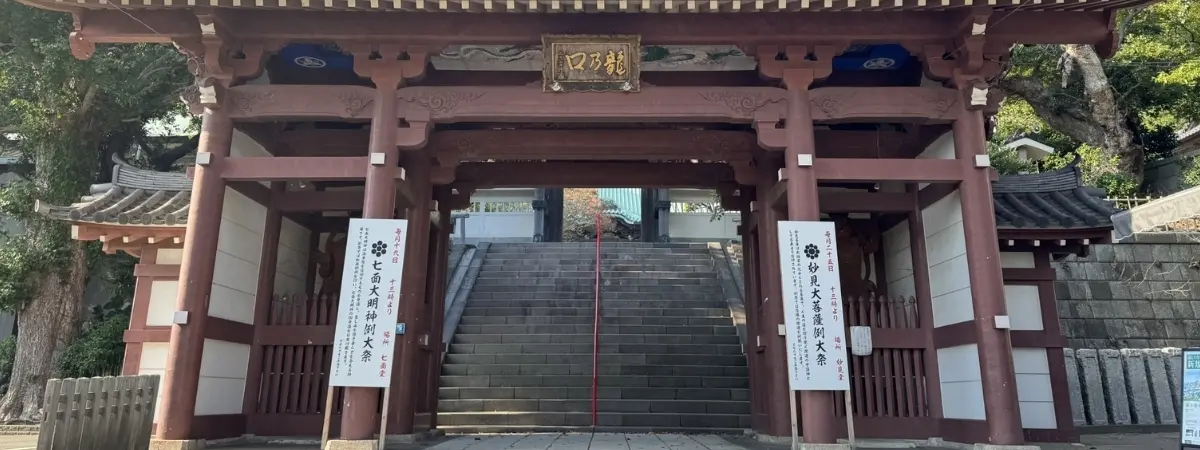
Ryuko Temple
In front of the gate at the entrance, quietly join your hands (gassho) and bow once. This is also a boundary separating the secular world from the sacred precinct, so it is preferable to step over the horizontal bar at the bottom of the gate (the threshold - shikii) rather than stepping on it. Unlike at a shrine, it is not a breach of etiquette to walk in the center of the gate or the main path (sando) at a temple. When leaving after your visit, join your hands again and bow once toward the main hall (hondo).
2. Purify Yourself at The Chozuya
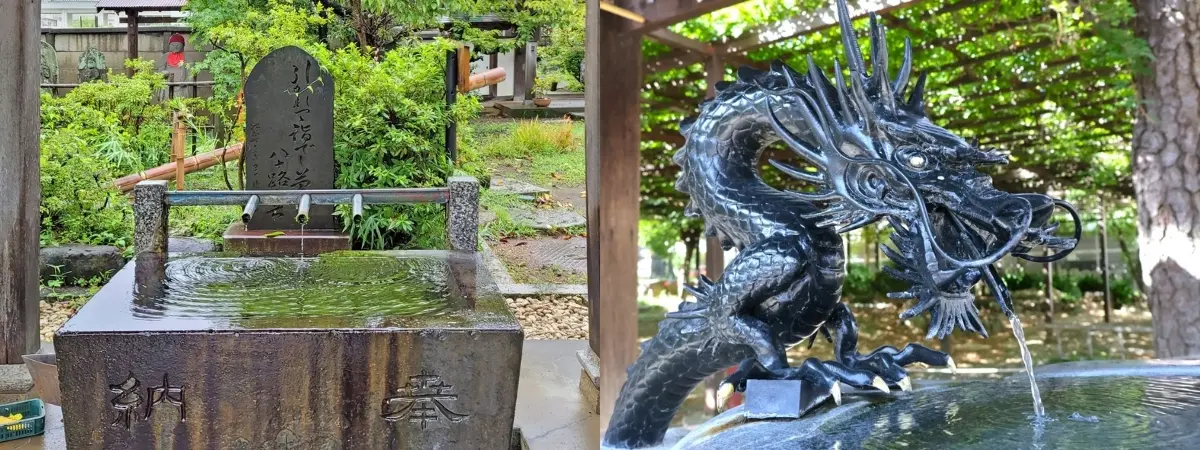
Komyo Temple / Kuzui Temple
2-1. Scoop Water and Wash Your Left Hand
First, hold the ladle (hishaku) with your right hand, fill it generously with water, and wash your left hand. Scoop the water flowing from the bamboo pipe or dragon-shaped spout, not from the basin ("mizubachi") where the water collects. Also, be careful not to let the water you used to wash your hand fall back into the basin.
2-2. Switch Hands and Wash Your Right Hand
Switch the ladle to your left hand and wash your right hand.
2-3. Switch Hands Again and Rinse Your Mouth
Switch the ladle back to your right hand, pour water into your left hand, and rinse your mouth. If you are concerned about hygiene, it is okay to just pretend to rinse.
It is forbidden to touch the ladle directly to your mouth or to make noise while rinsing. Also, be careful not to spit the water from your mouth into the basin.
3. Ring The Bell
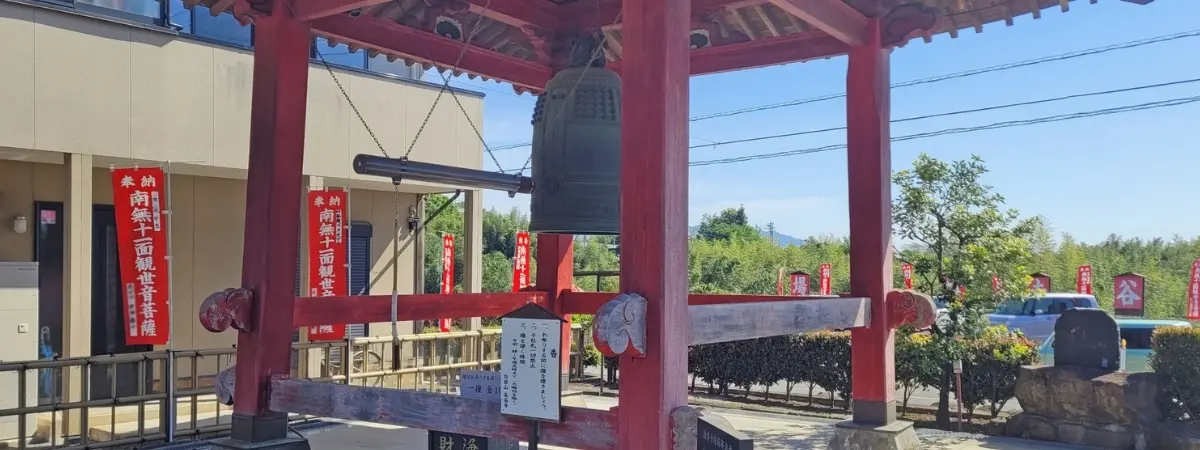
Hase Temple
If a large bell (kane) is installed at the temple and it is permitted, you may ring it.
Note: Ringing the bell when leaving the temple is called "de-gane" or "modori-gane" and is said to be for sending off the dead. This is considered bad luck, so be sure to ring it before you pray.
4. Burn Incense
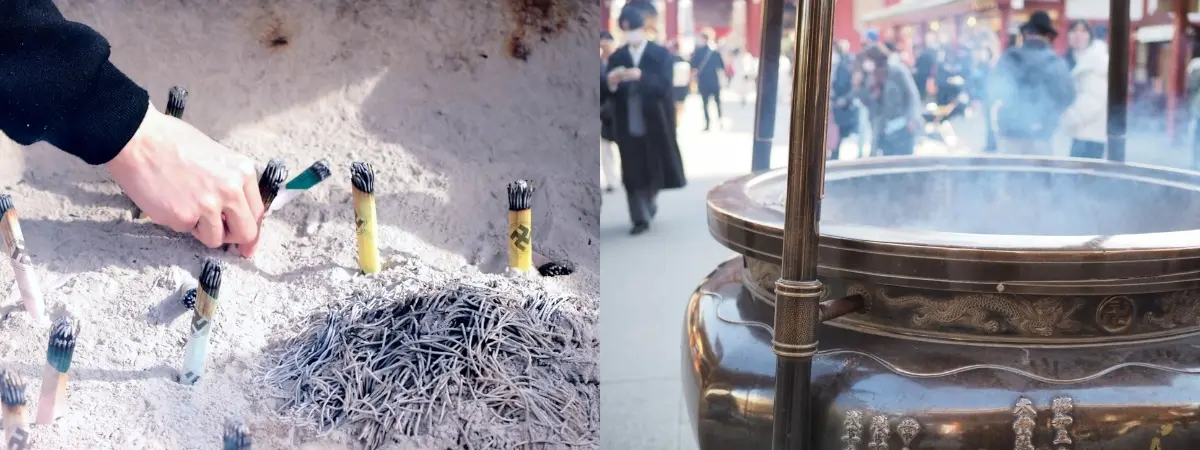
Sensoji Temple
If incense (osenko) is available or if you have purchased some, light it using the provided candles and offer it at the incense burner (koro).
Extinguish the flame by fanning it with your hand, then place it in the burner near the middle or in an empty area. It may burn more vigorously than you expect, but blowing on it with your breath is a breach of etiquette.
At a "jokoro" (large communal incense burner) where smoke is constantly rising, it is said to be good to bathe afflicted or painful parts of your body in the smoke, and you may see visitors doing this. It’s said that wafting the smoke over your head will make you smarter, which is why many people can be seen letting the smoke drift onto their heads.
5. Proper Etiquette and Rules When Praying
5-1. Put in an Offering
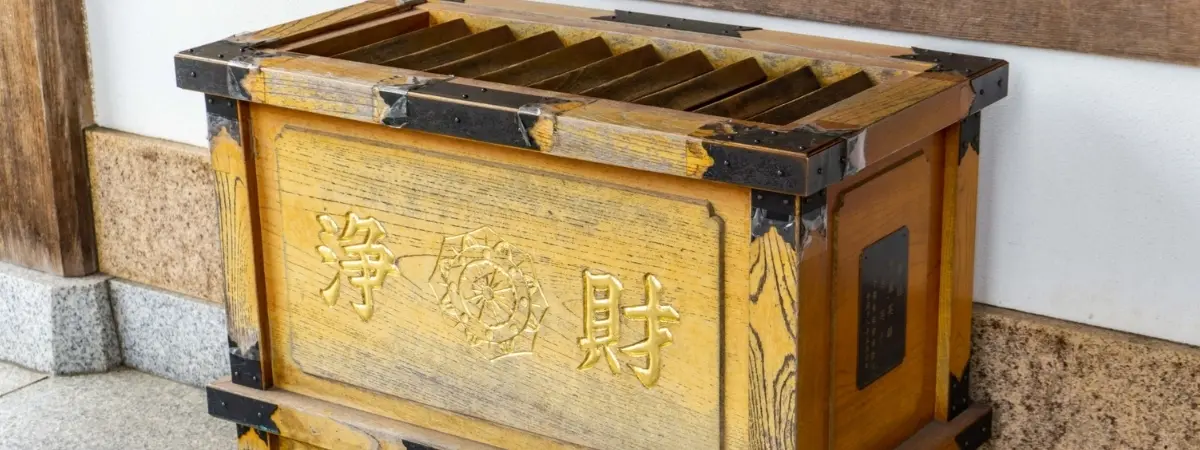
Shinshoji Temple
When you arrive at the main hall (hondo), put your offering (osaisen) into the offering box. This is not mandatory, and the amount does not make your wishes more likely to come true. It is fine to put in an amount you are comfortable with as a token of gratitude.
Also, it is common to use puns (goroawase) for good luck, such as 5 yen = go-en (homophonous with 'good connections/fate') or 11 yen = ii en ('good connections'). There are various puns depending on the wish, such as for work luck or success in love, so it might be interesting to look them up.
5-2. Ring The Waniguchi or Bell
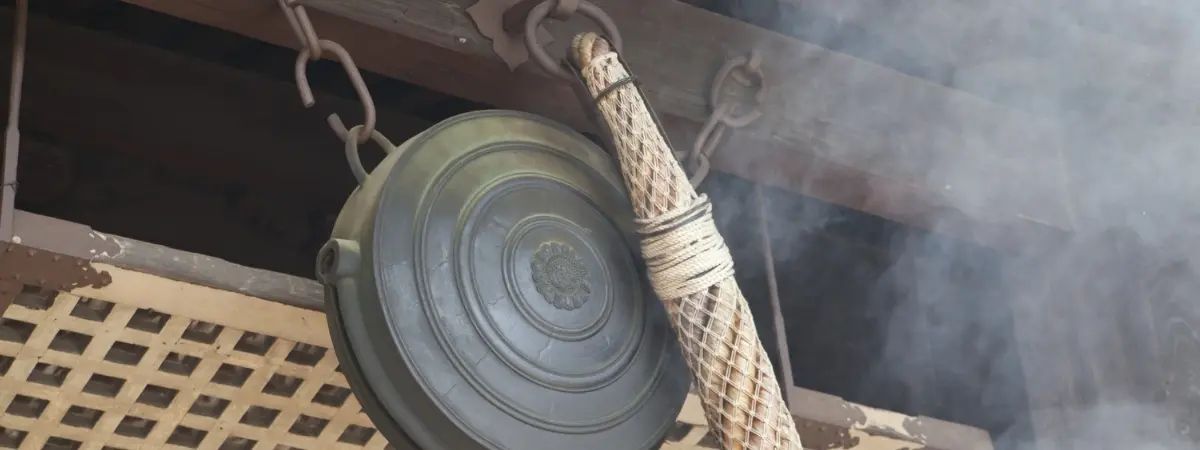
Kiyomizu Temple
Ring the bell (suzu) or waniguchi (a small, gong-like Buddhist instrument hanging in front of the hall).
It’s said that the bells at shrines are there because the gods will not come unless they are called, but buddhas are believed to possess the power of clairvoyance (senrigan), so temples may not have suzu or waniguchi.
If one is present, ring it gently just as you would at a shrine to greet the Buddha respectfully.
5-3. Put Your Hands Together in Prayer
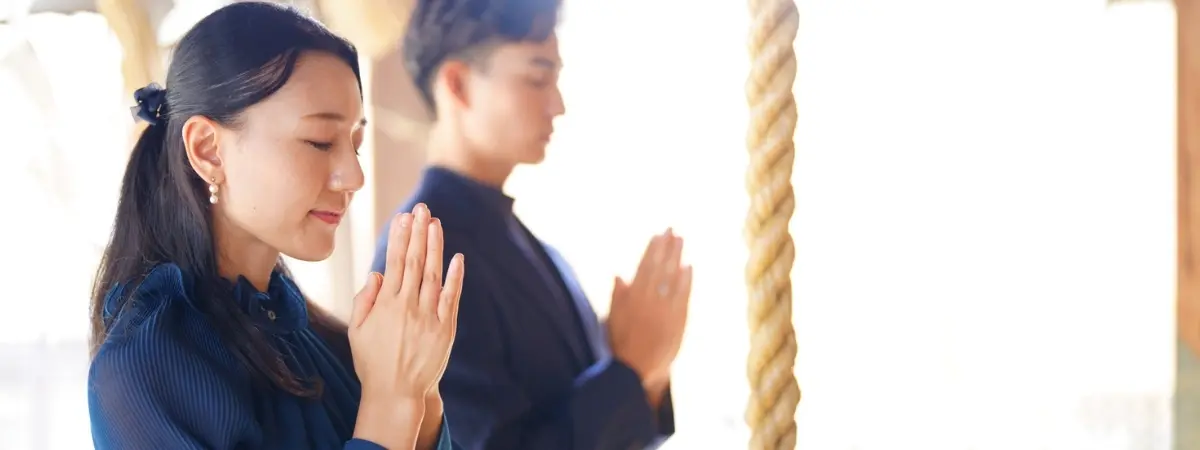
At temples, it’s common to simply bow once and quietly put your hands together in prayer (gassho) without clapping. However, practices can vary depending on the Buddhist sect, so it’s best to observe those around you and follow their lead.
5-4. Praying and Offering Incense
Just like at shrines, your prayer shouldn’t be a simple wish for personal gain. Begin by stating your name and address, then express how you intend to act or make efforts moving forward. Convey your gratitude and ask for continued guidance and protection. You may say this out loud or silently in your heart—either is perfectly fine.
Furthermore, if there is a place for oshoko (offering powdered incense), do it after the gassho. Take a small pinch of powdered incense with your right hand, lift it up to the level of your face, then lower it and offer it into the censer, gently supporting your right hand with your left.
Afterward, put your hands together once more and bow to conclude the ritual.
Omikuji, Omamori, and Goshuin Are for After Prayers
After you have finished praying, you can get omikuji (fortunes), omamori (amulets), and goshuin (shrine/temple stamps). Some people tie bad omikuji fortunes within the grounds, but it is also fine to take them home as advice from the Buddha. If you do tie it on the grounds, be sure to use the designated place. The trees and ema (votive plaques) on the grounds are sacred, so please do not tie omikuji to them.
What Happens If You Make a Mistake?
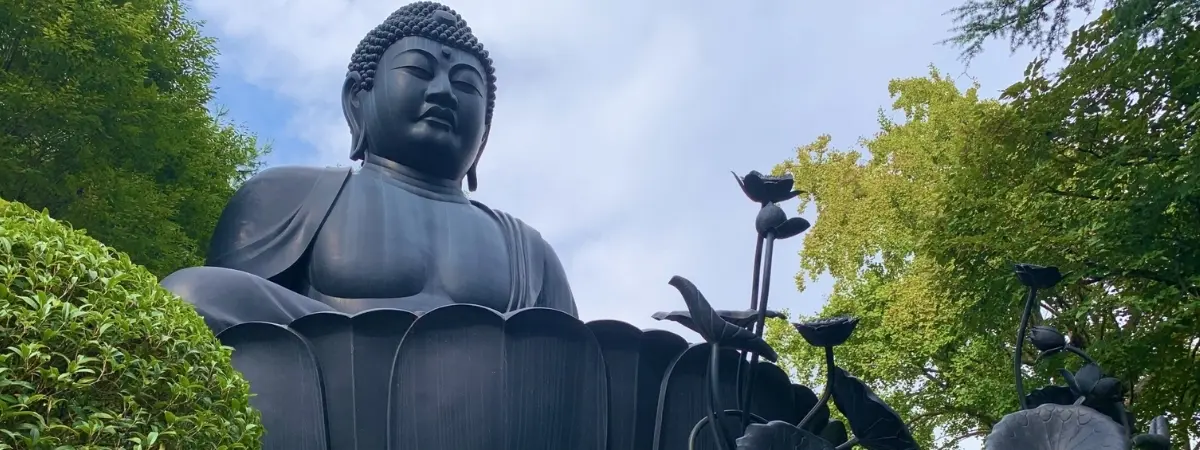
The Great Buddha of Tokyo
If you have a feeling of respect for the kami or Buddha, minor mistakes are not a problem. In fact, if you look up information on how to give prayers, you will find various interpretations on the procedures, the number of claps, and so on.
As explained at the beginning, the long-standing tradition of Shinbutsu-shugo—the blending of Shinto and Buddhism—has been deeply rooted in Japanese culture, so even if you mix up the types of prayer, it’s very unlikely that anyone will reprimand you for it. Of course, making a mistake in the procedure won’t bring any bad luck or punishment either.
If you are worried, it is fine to ask the Guji-san (Shinto priest) or Obo-san (Buddhist monk) at the shrine or temple, or to imitate the people around you.
Preventing Trouble During Your Visit
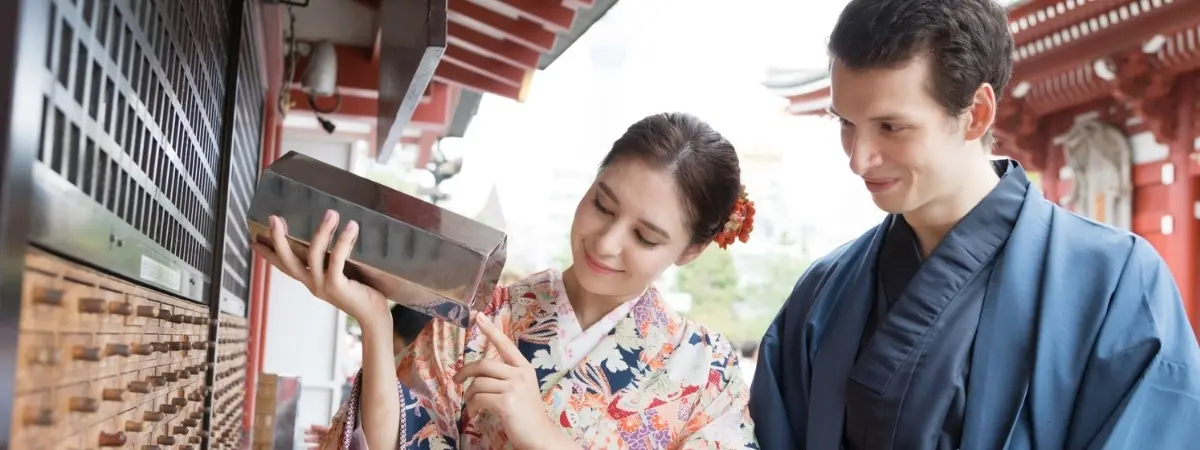
As these are sacred places, it is desirable to visit wearing somewhat modest, less-revealing clothing. Be conscious of the same level of formality you would show when visiting a religious facility of your own faith.
There are no stuffy rules for visiting, and anyone can come to pray regardless of belief. However, basic manners such as not being loud and not running around are important to keep in mind.
Please refrain from actions such as disrespecting the gods, buddhas, Japanese culture, or the people who work there, damaging temple or shrine buildings or objects as a joke, or treating the grounds like a playground. Such behavior can easily lead to trouble or even serious incidents.
The Japanese Perspective on Religion
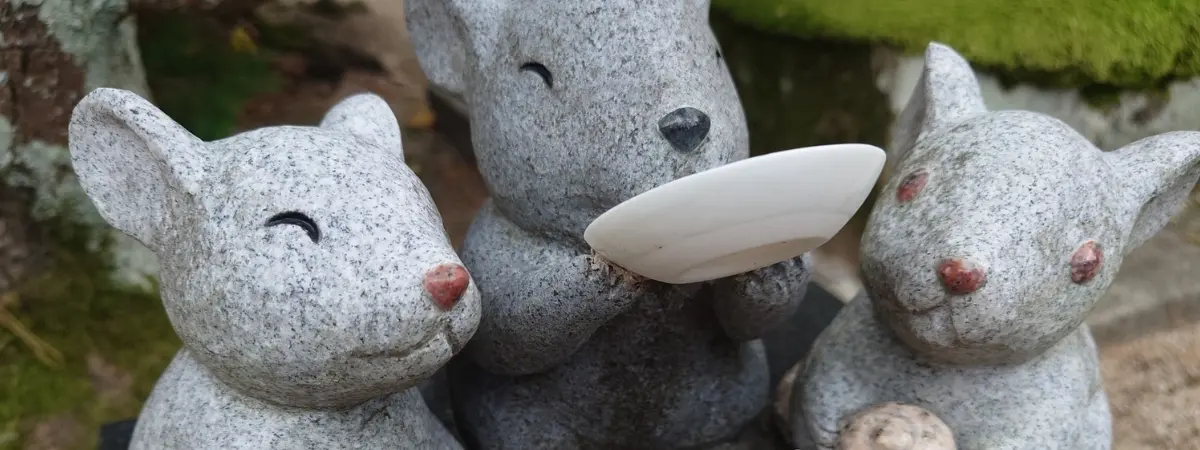
Mankusen Shrine
Many Japanese people do not seem to have a strong attachment to any particular religion or belief. However, the concept of “yaoyorozu no kami” (the eight million gods) is deeply rooted in everyday life. This idea holds that divinity or spirit resides in all things: in mountains and rivers, trees and animals, cherished objects that have been used for many years, and even in a single grain of rice.
For that reason, carelessly harming or disrespecting nature or objects is considered highly irreverent and believed to invite misfortune. For example, trimming branches or leaves within shrine grounds for the sake of filming or photography, or treating amulets and temple seals carelessly because they were purchased with money, and filming/streaming such behaviors can lead to strong backlash and criticism far beyond what one might expect.
It’s important to recognize that temples and shrines are not only popular tourist destinations but also places of worship. Anything found within their grounds, as well as items received from them, should be treated with care and respect.