Demon Slayer Real Life Locations Guide: Visit the Places Connected to the Characters
Demon Slayer: Kimetsu no Yaiba is a manga by Koyoharu Gotouge that was serialized in Weekly Shōnen Jump from 2016 to 2020. It was adapted into an anime in…
六区ブロードウェイ商店街
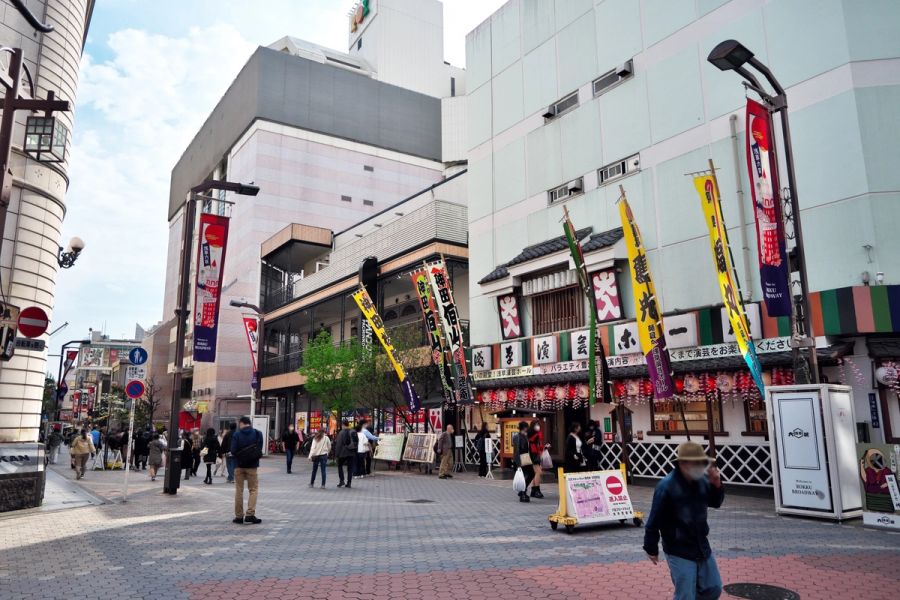
It refers to a shopping district in Asakusa that was once a major hub for theaters and entertainment facilities. Today, it is a bustling area filled with restaurants and performance halls, retaining a vibrant "shitamachi" (traditional downtown) atmosphere.
While Asakusa is home to many tourist spots like Kaminarimon and the Sumida River, Rokku is the birthplace of "Asakusa Opera," an opera and operetta movement that caused a massive sensation during the Taisho era (1912–1926). It was the site of the Tokiwaza theater and Japan's first "katsudo shashinkan" (what we now call movie theaters). Since then, it has remained a sacred ground for Japanese entertainment, producing stars of manzai, skit comedy, rakugo, and Shingeki (modern theater).
In 1873, the grounds of Senso-ji Temple were designated as a public park. Following land readjustment, "Asakusa Park Rokku" (the Sixth District) was born. Subsequently, permanent theaters for films and opera were established, gaining immense popularity. Asakusa Opera staged works such as Offenbach’s Orpheus in the Underworld (Heaven and Hell), Strauss’s Salome, Bizet’s Carmen, and The Phantom of the Opera based on Gaston Leroux's novel. In 1890, the "Ryunkaku," a 12-story observation tower—the tallest in Japan at the time—opened its doors. It drew significant attention for being the first building in Japan equipped with an electric elevator.
Although the area briefly declined following the Great Kanto Earthquake of 1923, it experienced a resurgence around 1930 as a town of popular entertainment, featuring light theater and skits. It became one of Japan’s leading show business districts, producing stars such as Kiyoshi Atsumi (famous for Tora-san), the critically acclaimed comedian and film director Beat Takeshi, and playwright Hisashi Inoue.
While Asakusa Rokku later faced a period of decline, events like the Sumida River Fireworks Festival and the Asakusa Samba Carnival began receiving media coverage during the Heisei era. In 2013, the "Asakusa Rokku Revitalization Project" was launched. The project involves experimental initiatives, including various events and street stalls.
"Asakusa Rokku Broadway" is currently a lively area where various facilities such as restaurants, amusement centers, and hotels gather. Here are some of the major shops and facilities:
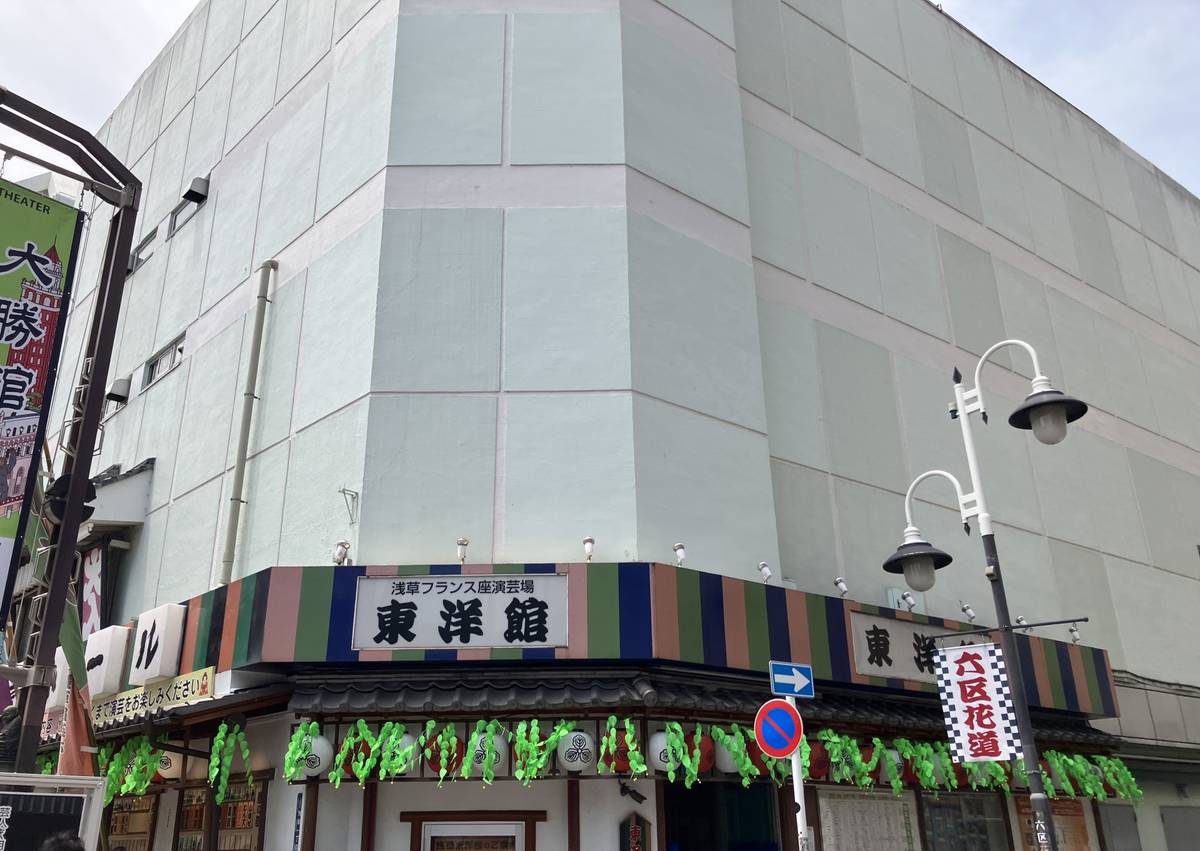
This is the only "Iromono Yose" (variety theater) in Tokyo that holds performances 365 days a year, from 12:30 to around 17:00. "Iromono" refers to traditional performing arts other than rakugo, such as manzai, stand-up comedy, skits, magic, acrobatics, impressions, and paper-cutting (kamikiri). It opened in 1951 as the "Asakusa France-za" and has produced many famous comedians. Tickets are generally sold as day-passes only. You buy your ticket at the "kido" (entrance) and can sit freely in any available seat—a traditional style that remains today. Eating and drinking are permitted inside, and the shop sells snacks, drinks, and canned beer. Between 15 and 20 acts—ranging from newcomers to veterans—perform daily, with schedules posted on their website. It is a theater where you can experience various forms of "laughter," from popular comedians frequently seen on TV to hidden gems known only to enthusiasts.
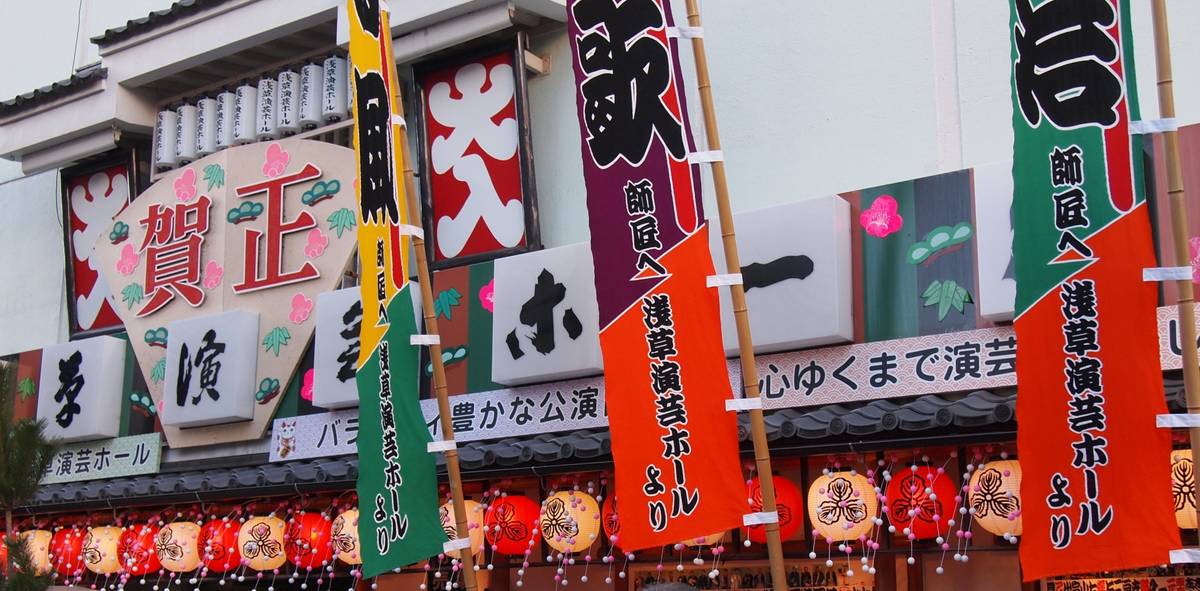
One of Tokyo’s "Rakugo Jozeki" (dedicated theaters where rakugo is performed 365 days a year), featuring rakugo, manzai, magic, acrobatics, and suikyoku (traditional music). Since its opening in 1964, legendary masters such as Katsura Bunraku, Kokontei Shinsho, Sanyutei Ensho, and Hayashiya Sanpei I have graced its stage. Currently, the Rakugo Association and the Rakugo Geijutsu Association take turns performing every 10 days. There are day and evening shows, with the evening show ending around 21:00. Like Toyokan, eating and drinking are allowed, and bento boxes are sold at the shop, making it an easy place to drop by after work.
A large commercial complex featuring the "Matsuri-yu" spa facility, a fitness club, restaurants, and fashion and lifestyle shops. It consists of "ROX," "ROX2G," "ROX・3G," and "ROX DOME." The main building, ROX, is directly connected to the Tsukuba Express Asakusa Station.
The largest and oldest existing strip theater in Japan. It is popular for its unique Japanese evolution of the strip show, featuring various styles including Japanese dance, rock, jazz, ballet, hip-hop, reggae, and cosplay.
An off-track betting branch of the Japan Racing Association (JRA), located in an area filled with restaurants and commercial facilities. It offers free general seating from the B1 floor to the 6th floor, while the B2 floor features paid reserved seating where visitors can relax and enjoy the races.
〒111-0032 2 Chome-6 Asakusa, Taito City, Tokyo
Loading map...
The anime, manga, and games that feature Rokku Broadway in real life.
Demon Slayer: Kimetsu no Yaiba is a manga by Koyoharu Gotouge that was serialized in Weekly Shōnen Jump from 2016 to 2020. It was adapted into an anime in…
Last Updated:
New articles and updates, delivered occasionally.
No spam. Unsubscribe anytime.