Yamagata
山形県
Start here
What to know about Yamagata
Yamagata Prefecture offers numerous attractions where magnificent nature and history exist in harmony. From the spectacular views of Yamadera and the frost-covered trees of Zao to the nostalgic hot spring towns, you can enjoy different seasonal landscapes throughout the year.
The Mountain Temple in the Sky: Yamadera (Risshaku-ji Temple)
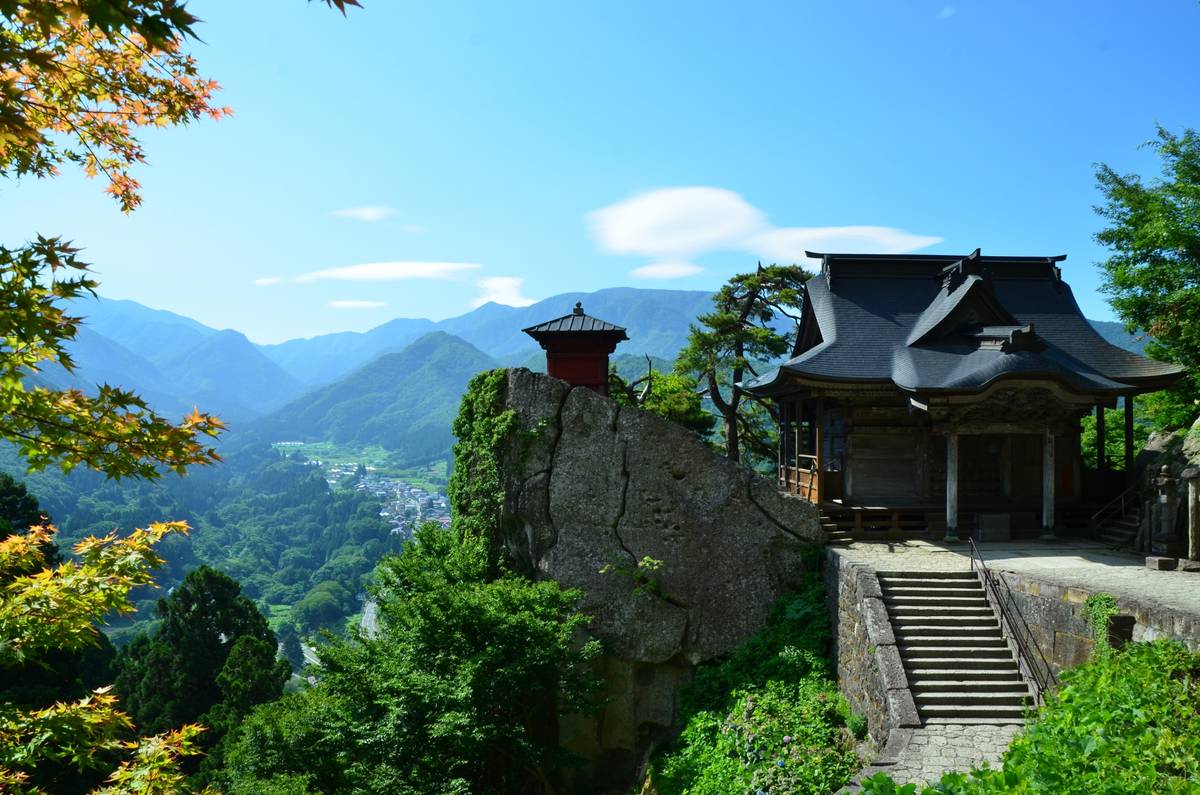
Risshakuji Temple / Photo AC
Yamadera is a Tendai-sect Buddhist temple located in Yamagata City, formally known as Hōshu-zan Risshaku-ji. It was founded in 860 by the monk Jikaku Daishi Ennin. The view from Godaido Hall, reached after climbing approximately 1,015 stone steps, is truly breathtaking, offering a sweeping panorama of the surrounding mountains and the temple town below. It is also famous as the place where the haiku poet Matsuo Bashō composed the verse, “Such stillness / the cicadas’ cry / seeps into the rocks.” One of its charms is that you can enjoy different spectacular views in each season, from fresh spring greenery and autumn foliage to snowy winter scenery.
A Land of Frost-Covered Trees and Hot Springs: Zao
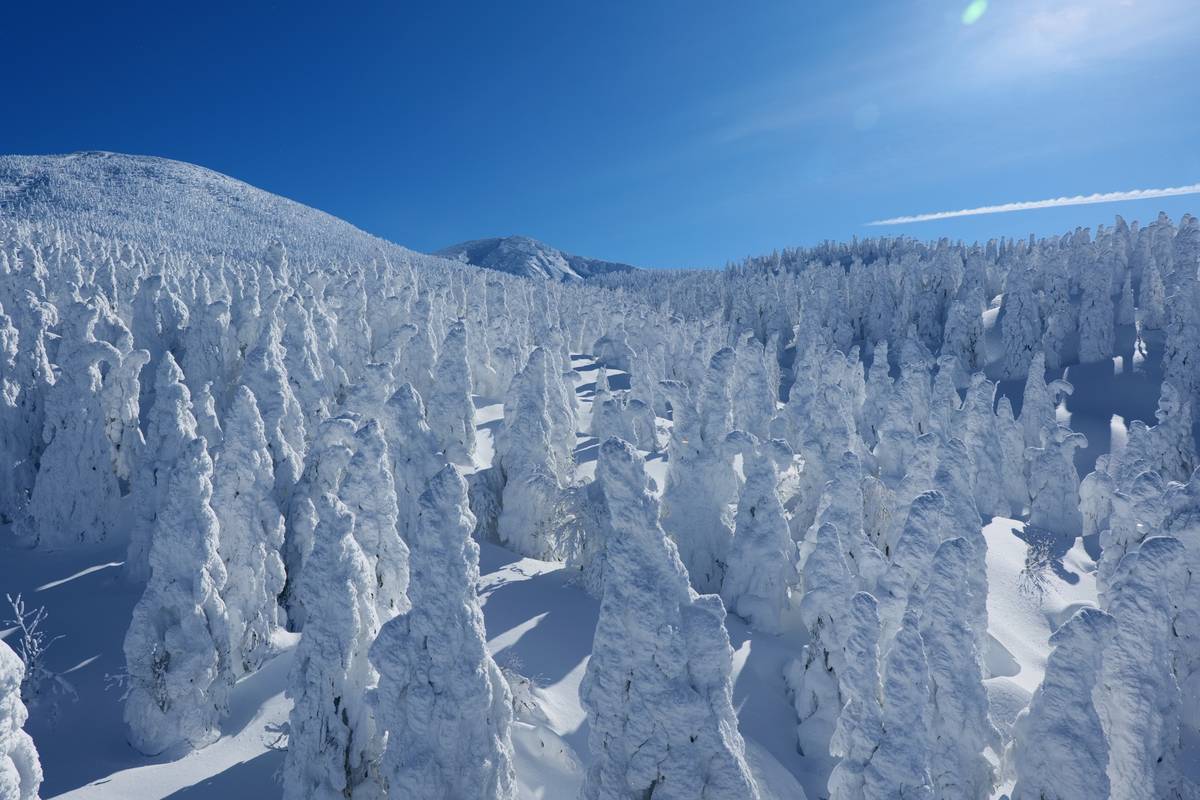
Snow Monster in Zao / Photo AC
Zao is a mountain range that straddles Yamagata and Miyagi Prefectures, world-renowned for its winter frost-covered trees. The fantastical landscape of “snow monsters,” formed when snow and ice cling to Aomori fir trees, is a unique winter spectacle found only in Zao. At the foot of the mountains lies Zao Onsen, a hot spring resort with a history of more than 1,900 years, cherished as a famous therapeutic spring. Its strongly acidic sulfuric waters are popular as a “beauty bath,” and the area attracts many visitors as a resort where you can enjoy both skiing and hot springs together.
Taishō-Romantic Atmosphere: Ginzan Onsen
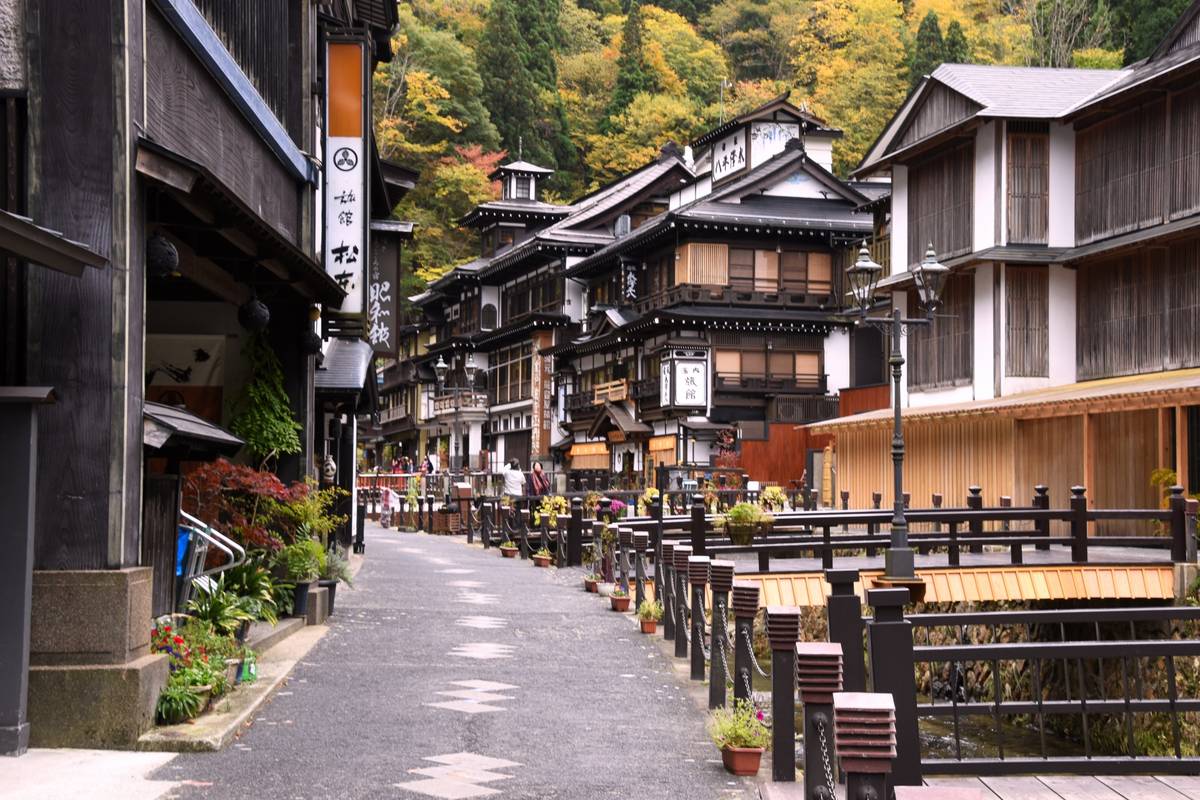
Ginzan Onsen / Photo AC
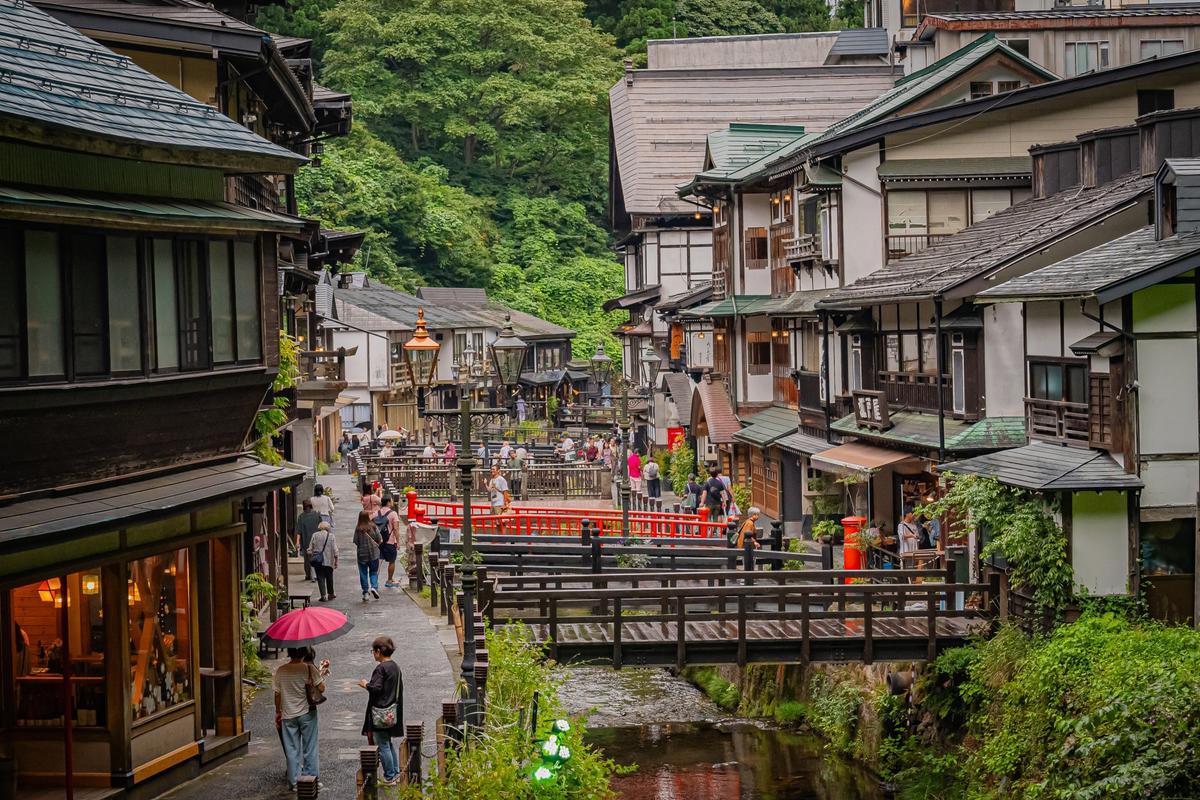
Ginzan Onsen is a hot spring town in Obanazawa City, known for its nostalgic scenery of wooden inns from the Taishō to early Shōwa periods lining the riverside. The hot spring, which bubbles up in an area that once prospered from silver mining, has a long history. At night, gas lamps are lit, creating an atmosphere that feels as if you have slipped back in time to the Taishō era. It is also known as a setting for the NHK morning drama series Oshin, and is a popular destination that attracts visitors from all over Japan.
With the tranquility of Yamadera, the dynamic natural scenery of Zao, and the retro townscape of Ginzan Onsen, Yamagata Prefecture is full of diverse attractions that cannot be fully experienced in a single trip.
Zoom in
Areas in Yamagata
Neighborhoods and districts to explore

Location
Where is Yamagata?
Yamagata Prefecture is located in the Tohoku region in the northern part of Honshu, facing the Sea of Japan, and its prefectural capital is Yamagata City. As of January 2026, the population is approximately 1 million, making it the third largest in the Tohoku region after Miyagi Prefecture and Fukushima Prefecture.
About 75% of the prefecture’s land area is covered by forests, and a major characteristic is that there are many basins surrounded by mountains. Geographically, the Dewa Mountains rise on the western side and the Ou Mountains on the eastern side, with the Mogami River—one of Japan’s three fastest-flowing rivers—running north–south between them. The Mogami River basin has a history of having prospered since ancient times through river transport.
The climate differs greatly between the inland and coastal areas. In the inland basins, temperatures tend to rise in summer, and Yamagata City has once recorded the highest temperature ever observed in Japan. On the other hand, there is heavy snowfall throughout the prefecture in winter, and the inland and mountainous areas in particular are known as heavy snowfall regions.
Loading map...
Access
Getting to Yamagata
The main ways to access Yamagata Prefecture are by Shinkansen and by airplane. From Tokyo to Yamagata City, you can take the Yamagata Shinkansen “Tsubasa,” which takes about 2 hours 30 minutes to 3 hours. The Yamagata Shinkansen branches off from the Tohoku Shinkansen at Fukushima Station and runs on conventional railway tracks, so one of its attractions is that you can enjoy views of Yamagata’s natural scenery from the train windows.
If you travel by airplane, it takes about 1 hour from Tokyo (Haneda) to Yamagata Airport. From Yamagata Airport to the center of Yamagata City, it takes about 35 minutes by bus. If you are visiting the Shonai region, using Shonai Airport is convenient.
For travel within the prefecture, you can move between major cities such as Yamagata City and Yonezawa City by JR lines, although the number of trains is relatively limited. To efficiently visit tourist destinations such as Zao Onsen and Ginzan Onsen, using a rental car is recommended.
In winter, you need to be very careful when driving due to snowfall and icy roads. In addition, public transportation schedules may be disrupted by worsening weather conditions, so it is advisable to plan your trip with plenty of time to spare.
Local pride
Specialty Products
Yamagata Prefecture is renowned as one of Japan’s leading “fruit kingdoms,” where fruit cultivation thrives by taking advantage of the temperature differences characteristic of basin climates. In particular, it boasts the highest production volume in Japan for cherries and Western pears. In addition, the livestock industry has developed by making use of abundant water and high-quality rice, and the region is also famous as a production area for high-quality beef.
Many local dishes were created to endure the harsh winters of the inland areas, and the region’s food culture is still very much alive today. In the field of traditional crafts, woodworking and metalworking techniques have been passed down since ancient times, and products made by the hands of skilled artisans are known throughout Japan.
Food
Crafts & Others
Through the ages
History of Yamagata
The area of present-day Yamagata Prefecture was once called "Dewa Province." In the Heian period, Dewa Province was divided into Uzen Province and Ugo Province, and the territory of what is now Yamagata Prefecture belonged mainly to Uzen Province.
During the Sengoku period, Mogami Yoshiaki expanded his power with Yamagata Castle as his base and came to rule most of Dewa Province. Mogami Yoshiaki sided with the Eastern Army in the Battle of Sekigahara and became a feudal lord with a domain of 570,000 koku, but due to internal conflicts afterward, the Mogami clan was dispossessed of its domain.
In the Edo period, the Uesugi clan of the Yonezawa Domain became well known. Uesugi Yōzan carried out domain reforms and is known for rebuilding the financially troubled domain. His phrase "If you try, you can succeed" ("Naseba naru") has been passed down to the present day.
After the abolition of the han system and the establishment of prefectures in 1871, the present-day Yamagata Prefecture was formed in 1876. It is said that the name "Yamagata" derives from the region’s terrain, where many mountains rise within the prefecture.
Continue exploring
Discover other areas and hidden gems across Tohoku Region.