- Home
- Locations
- Tohoku Region
- Fukushima


Fukushima
福島県
Where is Fukushima?
Fukushima Prefecture sits at the southernmost edge of the Tōhoku region, with its capital in Fukushima City. Home to approximately 1.8 million people as of 2024, it covers roughly 13,784 square kilometers, making it the third-largest prefecture in Japan after Hokkaidō and Iwate.
The Ōu Mountains and the Abukuma Highlands divide the prefecture into three distinct regions—Aizu, Nakadōri, and Hamadōri—each with its own climate and cultural character. The Aizu region encompasses Mount Bandai and Lake Inawashiro, and receives heavy snowfall exceeding two meters in winter. Nakadōri, centered around basin areas, has a continental climate with significant temperature swings, bringing hot summers and cold winters. Hamadōri, facing the Pacific Ocean, enjoys relatively mild weather for Tōhoku, with minimal snowfall.
Loading map...
Specialty Products of Fukushima
Fukushima ranks among Tōhoku’s leading fruit-growing regions, with peach, pear, and apple cultivation thriving on the temperature variations typical of its basins. Rice farming has flourished across the expansive plains since ancient times, and the pristine water and quality grain have supported a long tradition of sake brewing. The prefecture’s breweries consistently earn top honors at national competitions, testament to their refined craftsmanship.
The Pacific coastline sustains fishing communities, giving rise to a food culture blessed by both sea and mountain. Traditional crafts such as lacquerware and pottery have been passed down through generations, particularly in the Aizu region, where artisan techniques remain vibrant.
Food

Peaches
Fukushima is Japan's second-largest peach producer, with sweet, fragrant fruit ripening in summer. The significant day-night temperature difference in the basins cultivates high sugar content, resulting in exceptionally juicy flesh.

Aizu Basashi
A local dish from the Aizu region featuring thinly sliced fresh horse meat. The clean, lean flavor pairs beautifully with garlic soy sauce or spicy miso.

Kitakata Ramen
Counted among Japan's three great regional ramen styles alongside Sapporo and Hakata. Characterized by light soy-based broth and flat, wavy noodles, the area is also known for its morning ramen culture.

Ika-Ninjin
A representative Fukushima dish made from julienned dried squid and carrots marinated in soy sauce. This preserved food serves as both a rice accompaniment and drinking snack, with flavors varying from household to household.

Kozuyu
A traditional Aizu soup made with scallop broth and ingredients like taro, wood ear mushrooms, and konnyaku noodles. This dish has been served at ceremonial occasions throughout the region's history.

Aizu Jidori
Local chicken raised in the Aizu region, prized for its firm texture and deep flavor. It can be enjoyed in various preparations, from yakitori to hot pot dishes.

Sake
Fukushima has achieved the highest number of gold medals at the Annual Japan Sake Awards, establishing itself as a premier sake-producing region. Quality rice, pure water, and refined techniques yield delicate, aromatic brews.
Crafts & Others

Akabeko (Red Cow)
A beloved papier-mâché folk toy from the Aizu region featuring a charming red cow with a bobbing head. It has been cherished as a talisman against disease and a symbol of good fortune.

Aizu Lacquerware (Aizu-nuri)
Traditional lacquerware with over 400 years of history in the Aizu region. Known for durability and beautiful finishes, it ranges from everyday tableware to elaborate maki-e pieces.

Ōbori Sōma Ware (Ōbori Sōma-yaki)
Pottery from the Hamadōri region with more than 300 years of history, distinguished by blue crackle glaze and running-horse motifs. Its double-wall construction provides excellent heat retention.
Areas
Discover the unique areas within this prefecture
Access to Fukushima
The Tōhoku Shinkansen offers convenient access to Fukushima, reaching Kōriyama Station in about 80 minutes and Fukushima Station in roughly 90 minutes from Tokyo Station. While Fukushima Airport serves the south-central area, limited flight schedules make rail the primary means of arrival.
Within the prefecture, the JR Tōhoku Main Line runs through Nakadōri, the Ban’etsu West Line connects to Aizu, and the Jōban Line serves Hamadōri. Given the prefecture’s vast size, chartering a taxi for multi-destination tours is a convenient option. Heavy winter snowfall in Aizu makes winter tires essential during the colder months.
History of Fukushima
In ancient times, this land formed part of Mutsu Province, with the Shirakawa Barrier marking the boundary between the capital and the eastern frontier, immortalized in classical poetry. During the Warring States period, the Date clan and Gamō Ujisato governed the region. In the Edo period, Hoshina Masayuki entered Aizu and established the foundations of the Aizu-Matsudaira family. Masayuki’s reputation as a wise ruler profoundly shaped the values of the Aizu domain.
In the final years of the Tokugawa shogunate, domain lord Matsudaira Katamori assumed the position of Kyoto Protector, and Aizu remained loyal to the bakufu until the end. The Boshin War brought fierce battles against imperial forces, inscribing tragic episodes such as the Byakkotai (White Tiger Brigade) and the siege of Tsuruga-jō Castle into history.
Following the abolition of the han system, the present-day Fukushima Prefecture took shape in 1876. In 1888, Mount Bandai erupted catastrophically, with the resulting collapse creating numerous lakes and ponds that transformed the landscape itself. Hideyo Noguchi, who grew up on the shores of Lake Inawashiro and became a world-renowned bacteriologist, remains an essential figure in Fukushima’s story. The Great East Japan Earthquake of 2011 inflicted devastating damage, yet recovery efforts continue with determination.
About Fukushima
Fukushima Prefecture, the southern gateway to Tōhoku, interweaves magnificent nature with profound history. The castle town of Aizu-Wakamatsu, the post town of Ōuchi-juku, the mystical lakes born from Mount Bandai’s eruption, and Hanamiyama Park blooming with spring flowers all welcome visitors with ever-changing seasonal beauty.
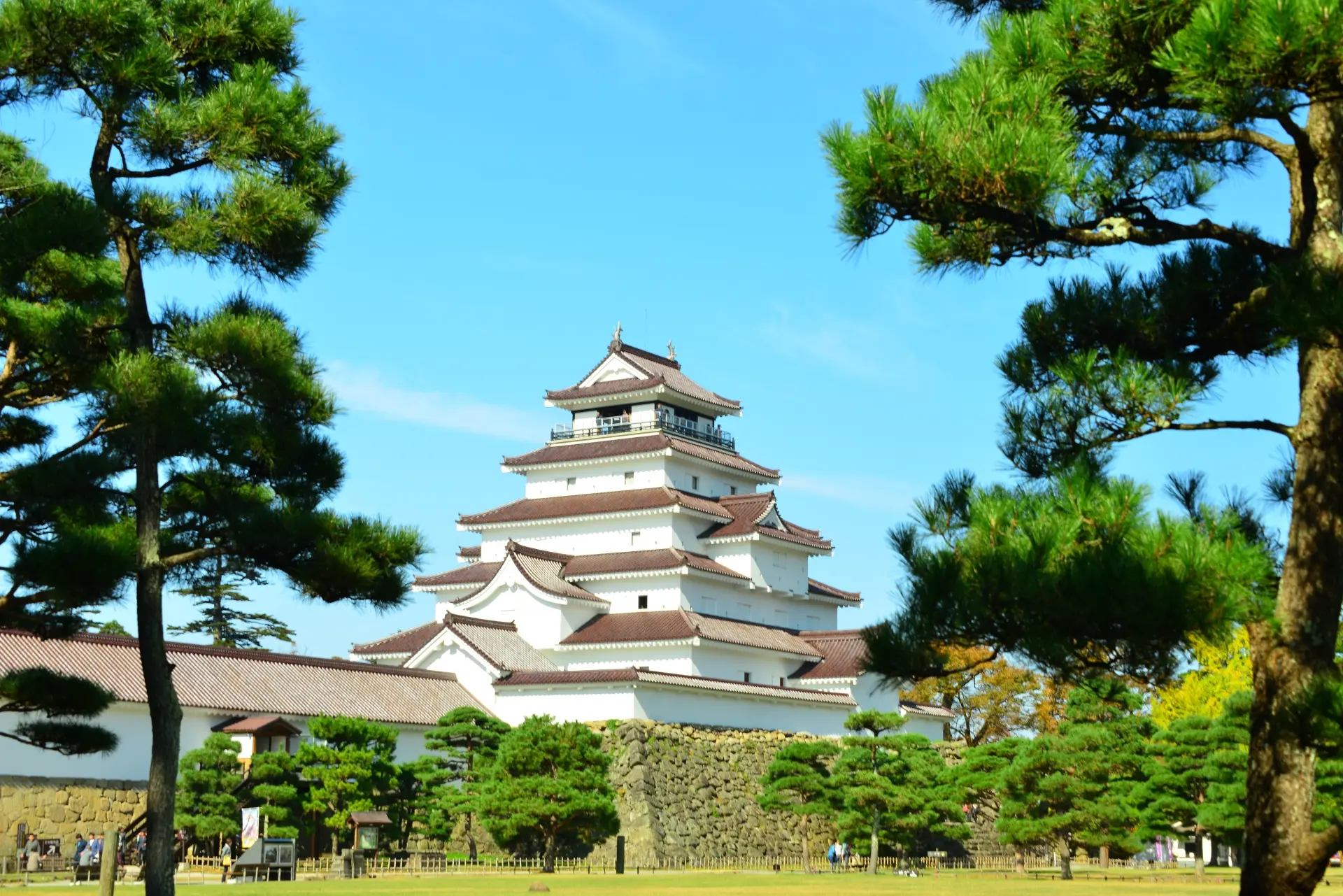
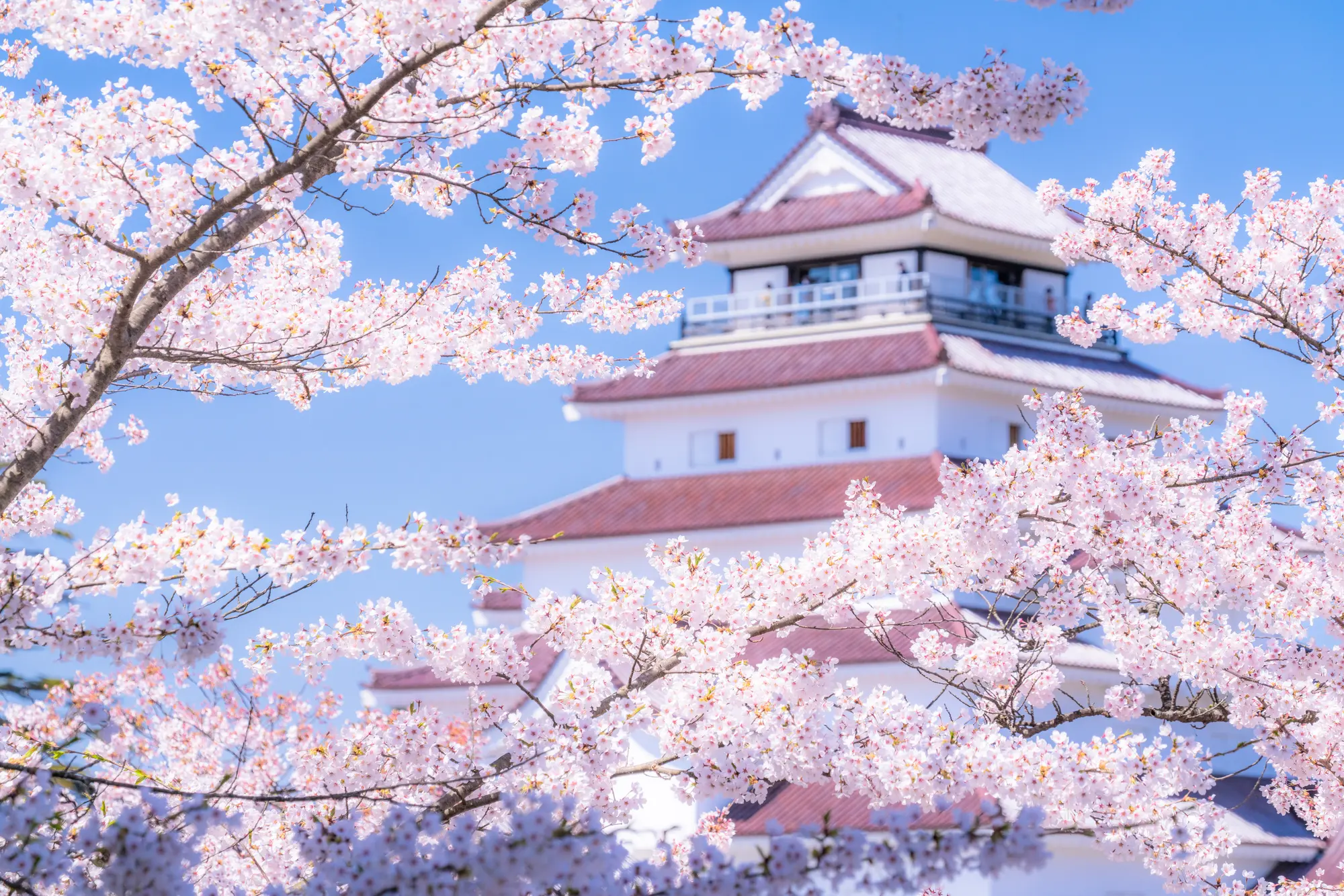
Tsuruga-jō Castle

Tsuruga-Jo Castle / Photo AC
The symbol of Aizu-Wakamatsu, Tsuruga-jō Castle withstood a month-long assault by imperial forces during the Boshin War, earning its reputation as an impregnable fortress. The current keep, reconstructed in 1965, houses a museum chronicling Aizu’s history. In 2011, the roof was retiled with red tiles matching those of the Bakumatsu period, making it the only red-tiled castle tower in Japan and a faithful echo of its historic appearance. Cherry blossoms grace the castle in spring, while autumn foliage and winter snow create their own stunning scenes.
Ōuchi-juku

Once a thriving post town on the Shimotsuke Kaidō connecting Aizu with Nikkō, Ōuchi-juku preserves the atmosphere of the Edo period remarkably intact. More than thirty thatched-roof houses line the old highway, creating a landscape that feels transported through time. Designated as an Important Preservation District for Groups of Traditional Buildings, the village remains inhabited by residents who maintain the scenery as part of their daily lives.
The local specialty, negi soba, offers a unique dining experience—buckwheat noodles eaten using a single long green onion as chopsticks.

Goshikinuma

The 1888 eruption of Mount Bandai gave birth to over thirty lakes and ponds of varying sizes. Bishamon-numa, Aka-numa, Midoro-numa, Benten-numa, Ruri-numa, Ao-numa, and others each display different hues, giving the area its name, which means "five-colored marshes." Minerals and phytoplankton in the water create surfaces that shimmer in emerald green and cobalt blue, shifting with the seasons, weather, and viewing angle. A nature trail of approximately 3.6 kilometers winds through the forest, offering a walk among these mysterious waters.
Hanamiyama Park

Hanamiyama Park in Fukushima City began as private land lovingly cultivated by the Abe family, flower farmers who opened their hillside to the public. Plum, cherry, forsythia, flowering peach, and numerous other trees blanket the slopes, transforming the landscape into a floral tapestry each spring. Photographer Shōtarō Akiyama praised it as a paradise in Fukushima, bringing national recognition. During peak bloom, temporary bus services run to the park, giving visitors a front-row seat to spring’s dazzling display.