Akita
秋田県
Where is Akita?
Akita Prefecture is located in the Tohoku region in the northern part of Honshu, facing the Sea of Japan, and its prefectural capital is Akita City. As of January 2026, its population is said to be about 900,000, making it one of the prefectures with a low population density on a national scale. On the other hand, about 70% of the prefecture’s land area is covered by forests, and a rich natural environment extends throughout the region.
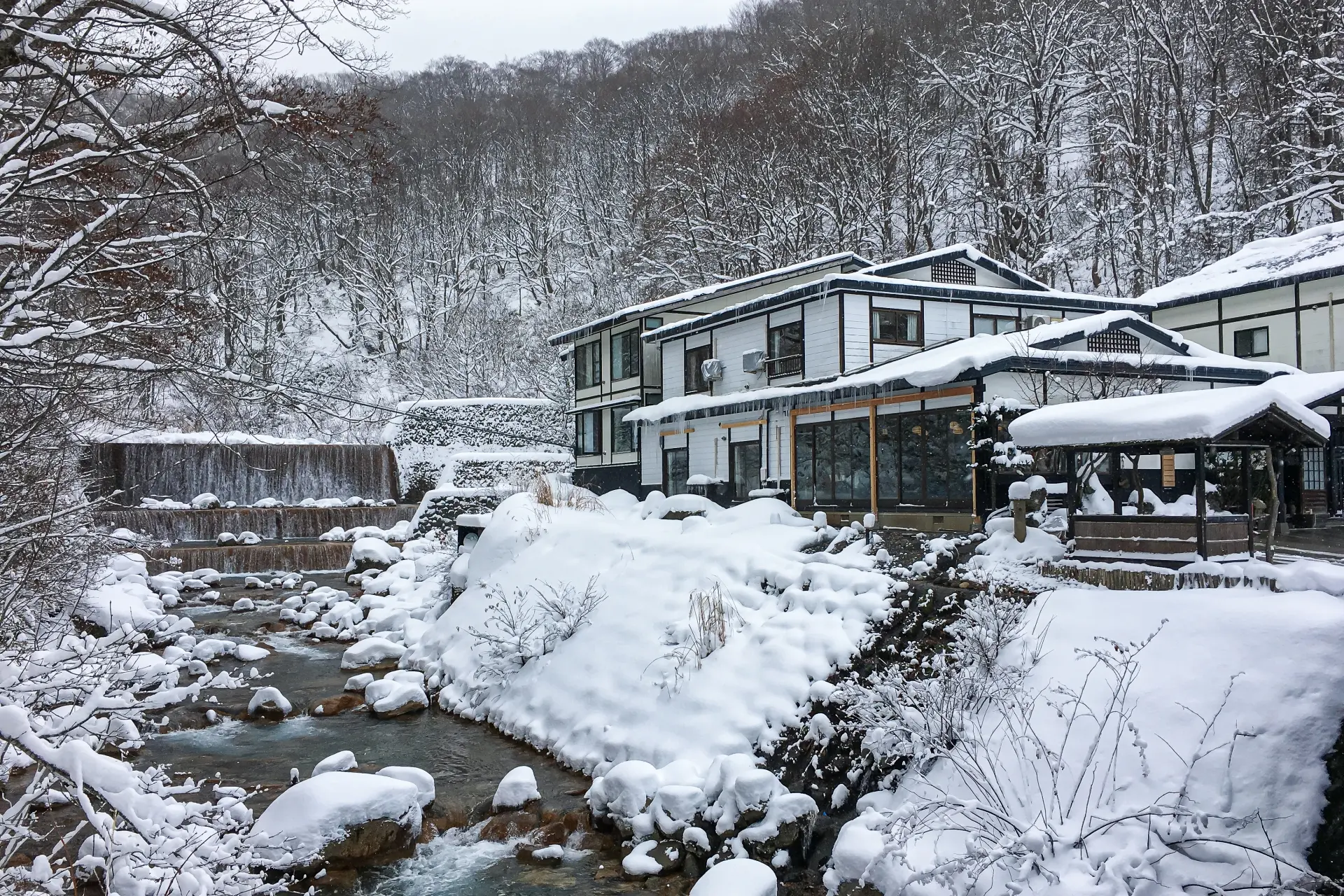
Geographically, the Ou Mountains run along the eastern side, while the western side faces the Sea of Japan, resulting in very distinct seasonal changes. In particular, winter is known as one of Japan’s heaviest snowfall areas, and in the inland regions it is not uncommon for snow depth to exceed 2 meters.
Summer is relatively comfortable; although there are days when temperatures temporarily rise due to the foehn phenomenon, it is characterized by having few periods where severe heat continues for long durations, unlike in Tokyo or Osaka.
In addition, Akita Prefecture is known nationwide as a major rice-producing area, and the rice paddies that spread across various parts of the prefecture are cherished as a beautiful landscape reminiscent of Japan’s traditional rural scenery.
Loading map...
Specialty Products of Akita
Akita Prefecture is one of Japan’s leading agricultural regions, blessed with fertile soil and abundant water resources, and rice cultivation is particularly thriving. The branded rice “Akitakomachi” is known nationwide, and the sake produced from its high-quality rice and pure water is also highly regarded as one of Akita’s representative local specialties.
In terms of food culture, the local hot pot dish “kiritanpo nabe,” enjoyed around a sunken hearth (irori), is famous. Kiritanpo simmered in broth made from Hinai-jidori chicken is cherished as an essential taste of winter in Akita. In addition, Inaniwa udon, counted among Japan’s three great udon varieties, is characterized by its smooth texture and refined flavor.
In the field of crafts, traditional handicrafts that showcase the advanced skills of artisans—such as magewappa (bentwood ware) made from Akita cedar and kabazaiku (cherry bark work) from Kakunodate—are still passed down today, enriching the region’s culture and daily life with their beauty.
Food

Kiritanpo
Freshly cooked rice is mashed, wrapped around a cedar stick, and grilled; this is a traditional local dish from Akita. It is typically served in a hot pot simmered in broth made from Hinai-jidori chicken, and its appeal lies in the simple flavor created by the chewy texture of the rice and the rich savoriness of the chicken soaking into it. From autumn through winter, it is cherished by locals as a dish that warms the body.

Inaniwa Udon
A type of hand-stretched udon produced in the Inaniwa district of Yuzawa City, Akita Prefecture, and known as one of Japan’s three great udon varieties. The noodles, carefully stretched by hand, are characterized by their smooth texture and slippery feel as they go down. They are typically enjoyed chilled as zaru-udon and are also popular as gifts.

Hinai-jidori
One of Japan’s three most famous native chicken breeds, traditionally raised in the Hinai area in the northern part of Akita Prefecture. Because it is carefully raised in an environment close to free-range, the meat is firm, and the more you chew, the more umami flavor spreads. It is an indispensable ingredient for the broth of Kiritanpo hot pot.

Akita Komachi
This is a branded rice that was created in Akita Prefecture in 1984 and is a variety with Koshihikari as its parent. The grains are plump, with a good balance of moderate stickiness and sweetness, and it remains delicious even after it cools. It is well suited for rice balls and boxed lunches, and it enjoys high popularity throughout Japan.
Crafts & Others

Odate Magewappa
This is a traditional wooden craft produced in Ōdate City, Akita Prefecture, which was designated as a Traditional Craft of Japan in 1980. The lunch boxes, made by shaving natural Akita cedar over 150 years old into thin sheets and bending them into shape, are characterized by the cedar’s fragrance and beautiful grain. Because the wood absorbs excess moisture, the rice stays plump and delicious even after it has cooled.

Kaba-zaiku
A traditional craft made in Kakunodate, Semboku City, Akita Prefecture, these decorative items use the bark of wild cherry trees. They were designated as a Traditional Craft of Japan by the national government in 1976. Tea caddies and small boxes that make use of the bark’s distinctive luster and texture develop an even deeper sheen the more they are used.
Access to Akita
Access to Akita Prefecture is convenient by airplane or Shinkansen.
Airplane
- Tokyo (Haneda) → Akita Airport: approx. 1 hour 5 minutes
- Akita Airport → Central Akita City: approx. 40 minutes by limousine bus
Railway (Shinkansen)
- Tokyo Station → Akita Station: approx. 4 hours on the Akita Shinkansen “Komachi”
You can also transfer from the Tohoku Shinkansen at Morioka Station, but the direct “Komachi” is more convenient.
Travel within the prefecture
- Railways and buses connect Akita City and the main sightseeing spots (the number of services is not as frequent as in major urban areas).
- To efficiently visit places such as Lake Tazawa, Kakunodate, and the Oga Peninsula, using a rental car is recommended.
Winter precautions
- Due to snowfall and icy roads, public transportation schedules may be disrupted, so it is safer to plan your trip with some extra time.
History of Akita
The history of Akita Prefecture begins in the Nara period, when it came under the control of the imperial court as part of Dewa Province. In 733, Dewa-no-saku was established as a frontier fortification to defend the border with the Emishi.
From the Sengoku period through the Edo period, the Satake clan governed the Kubota Domain (around present-day Akita City) and ruled the area for about 270 years. The Satake clan were originally feudal lords of Hitachi Province (present-day Ibaraki Prefecture), but after the Battle of Sekigahara they were transferred to Akita. They subsequently made major contributions to the political, economic, and cultural development of Akita.
During the Edo period, mining operations such as the Ani Mine and Innai Silver Mine were developed, and the production of gold, silver, and copper brought great prosperity to the region. In particular, the Innai Silver Mine became known as one of Japan’s leading silver mines, and at its peak, a bustling mining town formed there where many people lived.
With the abolition of the han system and establishment of prefectures in 1871, the former territories of the Kubota Domain and other domains were reorganized, and Akita Prefecture was created. There are several theories about the origin of the name “Akita,” but a leading one holds that it derives from an Ainu word meaning “land where reeds grow,” which was adapted into Japanese.
About Akita
Japan’s Deepest Lake: Lake Tazawa

Lake Tazawa / Photo AC
Lake Tazawa is a caldera lake with a circumference of about 20 km, located in Semboku City, Akita Prefecture. With a depth of 423.4 meters, it is the deepest lake in Japan. Thanks to this depth, the lake surface shines with a unique blue color often described as lapis lazuli, revealing different expressions depending on the viewing angle and weather.

Princess Tasuko Statue / Photo AC
On the lakeshore stands a golden statue of the legendary beautiful maiden Princess Tatsuko, which is cherished as a symbol of Lake Tazawa. Sightseeing boats operate from spring through autumn, allowing visitors to enjoy views of the surrounding mountains from on the lake.
“Little Kyoto of Michinoku”: Kakunodate

Buke-Yashiki Street / Photo AC
Kakunodate is a castle town in Semboku City, Akita Prefecture, known for its historic townscape where samurai residences from the Edo period still remain. The street of samurai residences lined with black wooden fences has been designated as an Important Preservation District for Groups of Traditional Buildings by the Japanese government.
In spring in particular, the weeping cherry trees of the samurai residences and the Somei Yoshino cherry trees along the Hinokinai River embankment bloom magnificently, creating a charming landscape that has earned Kakunodate the nickname “Little Kyoto of Michinoku.” As one of the Tohoku region’s leading cherry blossom viewing spots, it attracts many tourists every year.
Home of the Namahage: Oga Peninsula

The Oga Peninsula juts out from the western part of Akita Prefecture and is known for preserving the tradition of Namahage, which has been designated an Important Intangible Folk Cultural Property of Japan.
Namahage is a traditional New Year’s Eve event in which men wearing demon-like masks go from house to house, shouting “Any crying children here?” as they admonish the lazy and encourage diligence. At the Oga Shinzan Folklore Museum, visitors can experience this unique custom throughout the year.
The Oga Peninsula is also famous for its fresh seafood. In winter especially, local dishes such as Oga Shottsuru Yakisoba and Ishiyaki Ryori (stone-grilled cuisine) are popular specialties that can only be enjoyed here.