Okinawa
沖縄県
Where is Okinawa?
Okinawa Prefecture is located at the southernmost tip of Japan, floating on the Pacific Ocean about 640 km southwest of the Kyushu region. It is bordered by the East China Sea to the north and the Pacific Ocean to the east, making it the only island prefecture in Japan surrounded by the sea. Centered around the main island of Okinawa, it is composed of more than 160 islands, with 47 inhabited islands. Geographically, it is not connected by land to other prefectures, with Kagoshima Prefecture being the closest, separated by the East China Sea.
Okinawa Prefecture belongs to the subtropical oceanic climate, characterized by warm and humid conditions throughout the year. The average temperature is about 23 degrees Celsius, the highest in Japan, and even in winter, it remains warm with an average of around 15 degrees Celsius. From June to October, the region is also prone to typhoons.
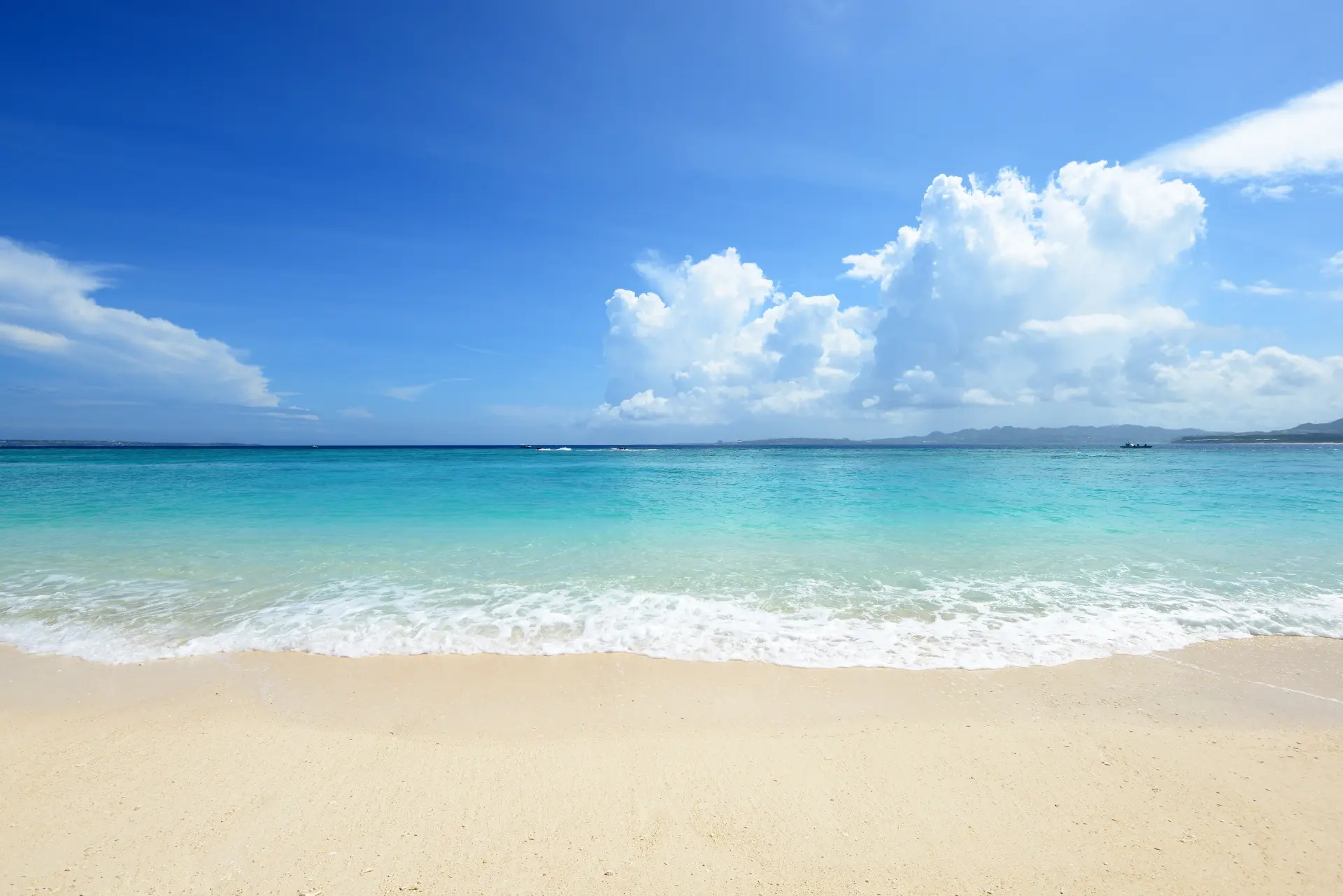
Blessed with beautiful seas and rich nature throughout the year, Okinawa Prefecture is known as a region with unique culture and history, offering attractions different from mainland Japan.
Loading map...
Specialty Products of Okinawa
Taking advantage of the warm climate and rich natural environment, there is an abundance of tropical fruits such as pineapples and mangoes. Additionally, being an island prefecture surrounded by the sea, seafood such as tuna, squid, and mozuku are also known as specialties.
Furthermore, there are many traditional crafts inherited from the Ryukyu Kingdom era, including bingata (紅型) and Ryukyu glass (琉球ガラス), as well as awamori (泡盛), a traditional Okinawan liquor, which are representative specialties of the prefecture. The diversity created by Okinawa's unique culture and natural environment is its charm.
Food
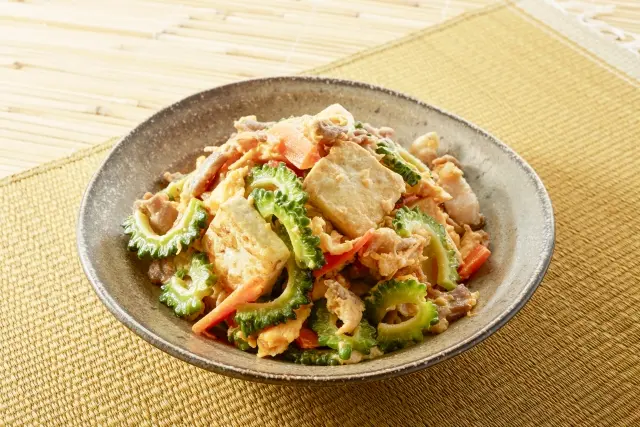
Bitter Gourd
A vegetable representative of Okinawa, characterized by its unique bitterness. It is rich in vitamin C and is considered effective in preventing summer fatigue. The stir-fried dish called "Goya Chanpuru" is cherished as Okinawan home cooking and is also popular among tourists.
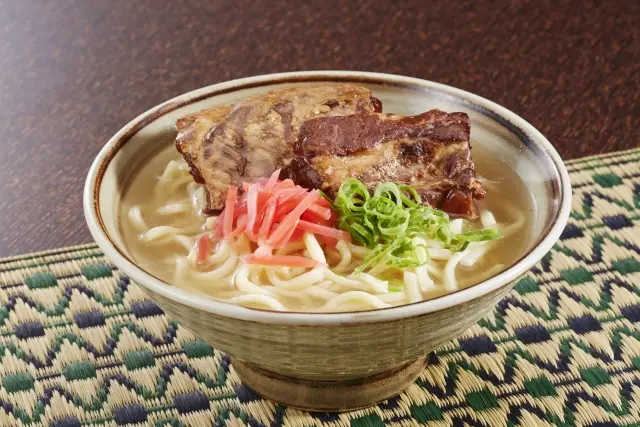
Okinawa Soba
Okinawa soba is a traditional Okinawan dish consisting of noodles made from wheat flour topped with pork belly, soki (rib meat), and kamaboko (fish cake). Unlike mainland soba, it has a texture similar to Ramen noodles. The broth is based on pork bones and bonito flakes, and the taste varies by restaurant and household. In 2006, it was selected as one of the "100 Best Local Dishes" by the Ministry of Agriculture, Forestry and Fisheries as "Ryukyu Cuisine."
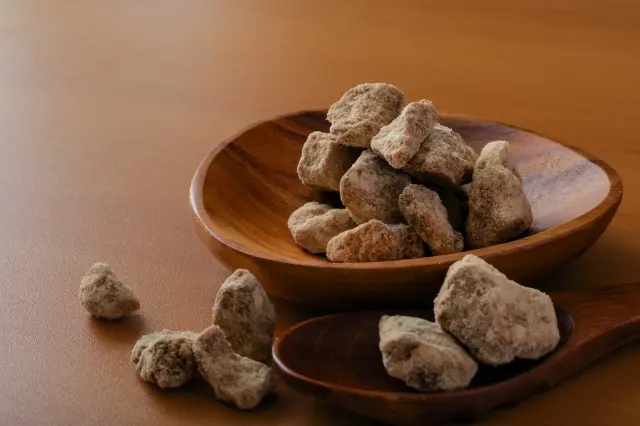
Kokuto (Brown Suger)
Kokuto [Brown Sugar] produced on the remote islands of Okinawa Prefecture, especially on Iriomote Island, Ishigaki Island, and Miyako Island, is made by boiling down the juice extracted from sugarcane. Rich in minerals and with a unique flavor, the brown sugar made using Okinawa's traditional methods is characterized by its deep taste and aroma.
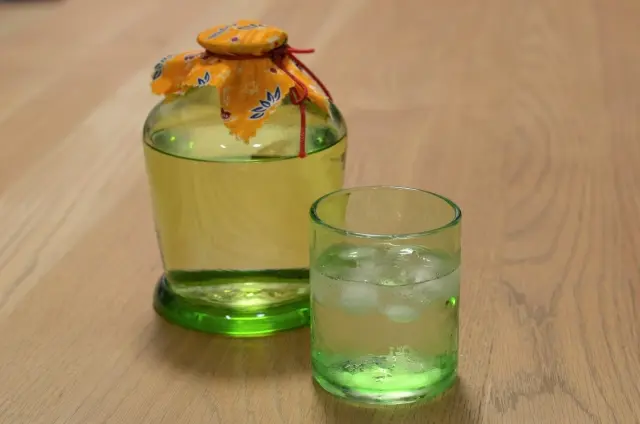
Awamori
Awamori is a traditional distilled spirit from Okinawa Prefecture, made from Thai rice. It has a unique aroma and taste, and those aged for more than three years, known as "kusu" (古酒/=Aged Sake), are particularly prized. Most have an alcohol content of around 30 degrees and can be enjoyed straight, on the rocks, or diluted with water. It is a proud part of Okinawa's liquor culture that has continued since the "Ryukyu Kingdom" era.
Crafts & Others
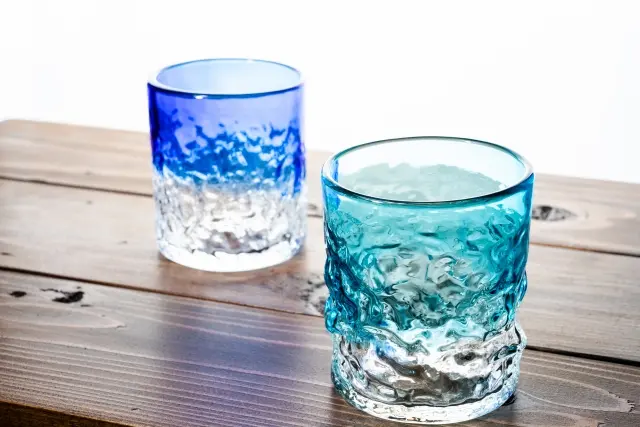
Ryukyu Glass
Okinawa's unique glass craft began during the American occupation period by recycling discarded cola bottles. It is characterized by its vivid colors and rustic texture with bubbles, and today it is loved by many tourists as a representative craft of Okinawa.
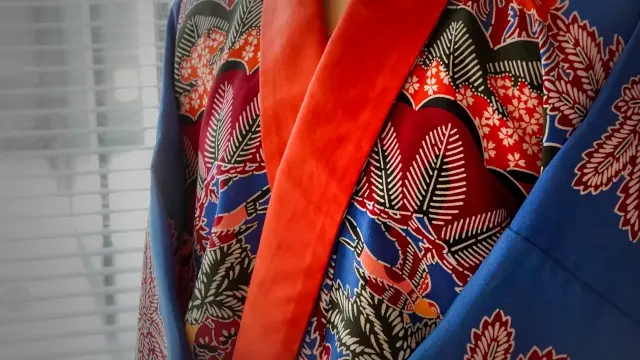
Bingata
Okinawa's traditional dyeing technique is characterized by vivid colors and bold patterns. During the Ryukyu Kingdom era, it was used for the formal attire of royalty and nobility. The delicate technique of using stencils for resist dyeing and hand-painting has been designated as an Important Intangible Cultural Property of the country.
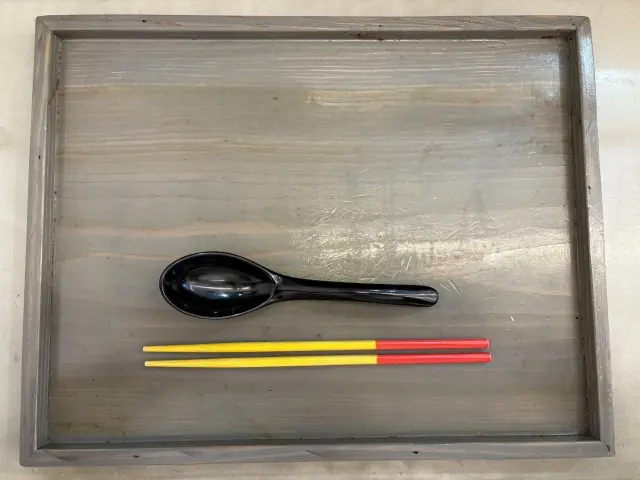
Ryukyu Shikki
This is a traditional Okinawa craft that combines robustness and beauty. It is characterized by unique decorative techniques called "Tsuikin" and shell-inlay techniques known as "Raden." The advanced skills inherited from the dynasty era are designated as a national traditional craft.
Access to Okinawa
Access to Okinawa Prefecture is primarily by air. Naha Airport serves as the gateway to the prefecture, with direct flights from various parts of Japan, including Tokyo (Haneda, Narita), Osaka (Itami, Kansai), Nagoya, and Fukuoka. The flight takes approximately 2 hours and 30 minutes from Tokyo and about 2 hours from Osaka.
By sea, ferries operate from Kagoshima Prefecture to Naha Port, providing a connection to the mainland. Additionally, high-speed boats and ferries depart from Naha Port and other ports to the prefecture's remote islands, allowing access to major islands such as Ishigaki Island and Miyako Island.
How to Move in Okinawa
Within the prefecture, a network of route buses is well-developed, centered around Naha City. The Yui Rail, also known as the Okinawa Urban Monorail, operates within Naha City, connecting Naha Airport to Shuri. Rental cars and taxis are also popular means of transportation for tourists.
Okinawa Prefecture is the only prefecture without a Shinkansen (bullet train) line, and there are no JR lines. Therefore, long-distance travel within the prefecture mainly relies on express buses or rental cars.
History of Okinawa
Okinawa Prefecture was an independent Ryukyu Kingdom with its own culture and history until it was annexed by Japan in 1879 during the Ryukyu Disposition. It became Okinawa Prefecture under the Meiji government's abolition of domains and establishment of prefectures. After World War II, from 1945 to 1972, it was under the administration of the United States. On May 15, 1972, Okinawa returned to mainland Japan, and the current Okinawa Prefecture was established.
Historical figures include the last king of the Ryukyu Kingdom, Shō Tai, and the physician Sai On, known as "Okinawa's Great Man," who made significant contributions to agricultural and forestry policies. Additionally, peace activist Chōkō Ahagon led the "All-Island Struggle" against the U.S. military's land seizures, promoting non-violent resistance.
In 1945, towards the end of the Pacific War, Okinawa experienced the Battle of Okinawa (also known as the "Typhoon of Steel"), a fierce ground battle that resulted in the loss of approximately 200,000 lives, including many civilians. This tragic history has ingrained a strong desire for peace among the residents of Okinawa.
About Okinawa
Okinawa Prefecture is home to many tourist attractions, including beautiful beaches and historical sites. Shurijo Castle is known as a symbol of the Ryukyu Kingdom and was registered as a World Heritage Site in 2000. Although it was destroyed by fire in 2019, restoration work is underway.
Churaumi Aquarium is a popular spot with one of the world's largest acrylic panels, allowing visitors to see large marine creatures like whale sharks up close.
Traditional Culture
Okinawa has a unique traditional culture that still thrives today. Eisa is a traditional dance performed during the Obon season, characterized by powerful movements to the rhythm of drums.
Ryukyu Dance is known for its graceful movements and vibrant costumes, and it is designated as an Important Intangible Cultural Property of Japan.
Dialects and Language
The Okinawan dialect (Uchinaaguchi) has developed uniquely from mainland Japanese and is recognized by UNESCO as a language in danger of extinction. Greetings such as "Haisai" (Hello) and "Nifee deebiru" (Thank you) are popular among tourists.
Longevity Culture
Okinawa has long been known as Japan's top longevity prefecture. The secret lies in the spirit of mutual aid called "Yuimaaru," a healthy diet centered on island vegetables, and moderate exercise due to the warm climate.
Traditional Okinawan cuisine, based on the concept of "Ishoku Dogen" (medicine and food from the same source), includes dishes like Goya Champuru, which are gaining attention as health foods.
Presence of U.S. Military Bases
Although Okinawa Prefecture accounts for only about 0.6% of Japan's land area, about 70% of U.S. military facilities in Japan are concentrated there. This situation has continued since the post-war period, making the base issue an important political agenda for Okinawa. Meanwhile, the influence of American culture formed around the bases can also be seen, creating a unique cultural background.
Unique Natural Environment
Okinawa Prefecture belongs to the subtropical climate and has a rich natural environment. The seas surrounded by coral reefs are home to diverse marine life, and many endemic species can be found on islands like Iriomote.
"Amami Oshima, Tokunoshima, Northern Okinawa Island, and Iriomote Island," including Iriomote Island, were registered as a World Natural Heritage Site in 2021, and their natural value is internationally recognized. Active conservation efforts are underway for rare species such as the Iriomote Wildcat and Yambaru Kuina.