Kagoshima
鹿児島県
Start here
What to know about Kagoshima
A Gateway to the Stars: Japan’s Two Space Centers
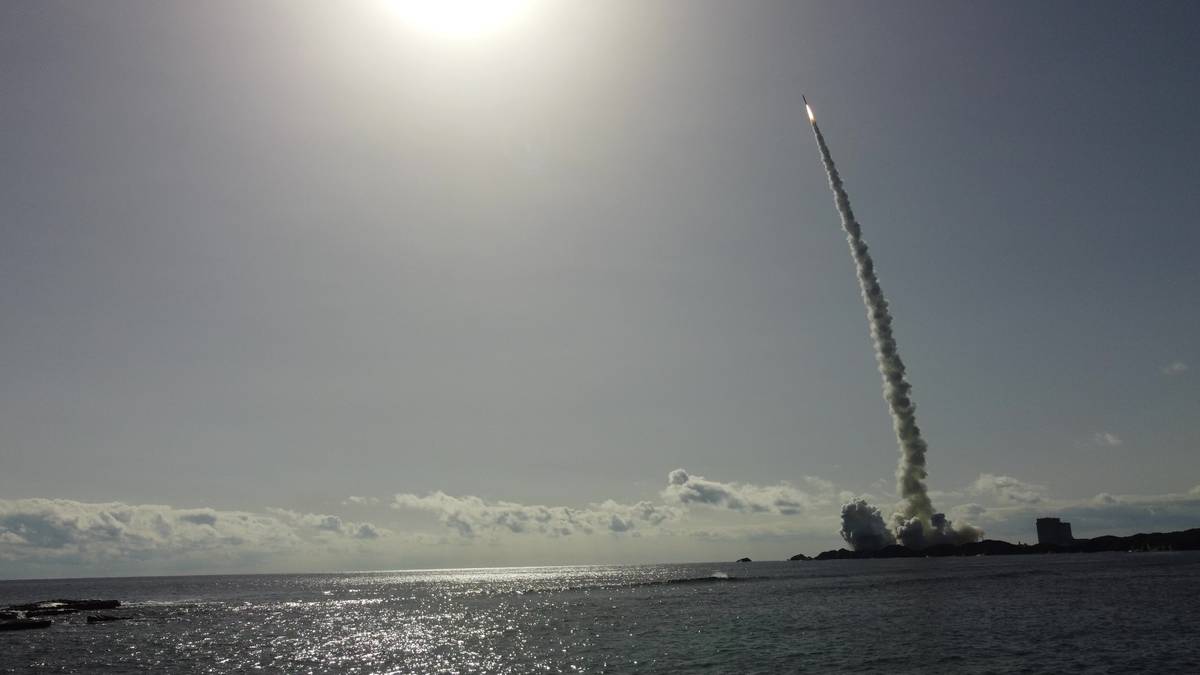
Kagoshima Prefecture is the "closest place to space" in Japan, being the only prefecture to host two rocket launch facilities. The Tanegashima Space Center is renowned as one of the most beautiful launch sites in the world and handles the liftoff of large-scale rockets.
Meanwhile, the Uchinoura Space Observatory in Kimotsuki is a historic site where Japan’s first satellite, Ohsumi, was launched. Today, it serves as a vital base for observation and the launching of deep-space probes. These two facilities place Kagoshima at the very forefront of Japan’s scientific and technological achievements.
Kagoshima Tea: Japan’s Leading Producer at the Municipal Level
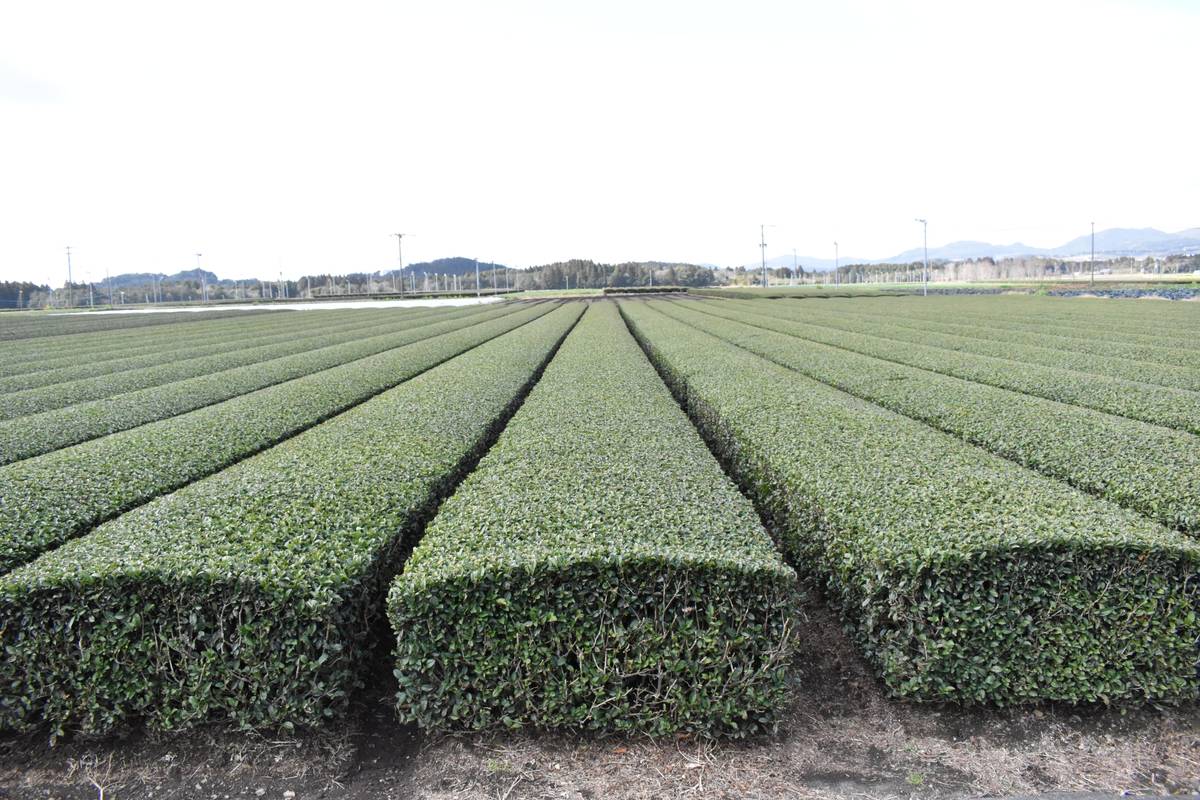
While Shizuoka is often the first name that comes to mind regarding Japanese tea, Kagoshima is a powerhouse in its own right, boasting some of the highest production volumes in the country. Notably, Minamikyushu City holds the record for the highest tea production of any single municipality in Japan. The region’s vast, flat terrain allows for large-scale tea cultivation, and the warm climate enables the harvest of the first tea of the season earlier than anywhere else in Japan. Branded as Kagoshima Tea, it is highly acclaimed both domestically and internationally for its rich aroma and deep, mellow flavor.
Japan’s Largest Bamboo Forests
It is a little-known fact that Kagoshima Prefecture possesses the largest area of bamboo forests in Japan. The region is particularly famous for its expansive groves of Moso bamboo, which have historically been used for traditional crafts and construction materials. Today, there is a growing movement to redefine this abundant resource as an eco-friendly material. From the production of bamboo-based paper to sustainable resource management focused on carbon sequestration, Kagoshima’s traditional bamboo culture is attracting new attention through the lens of modern SDGs (Sustainable Development Goal).
The Mystical Forest of Studio Ghibli’s Princess Mononoke
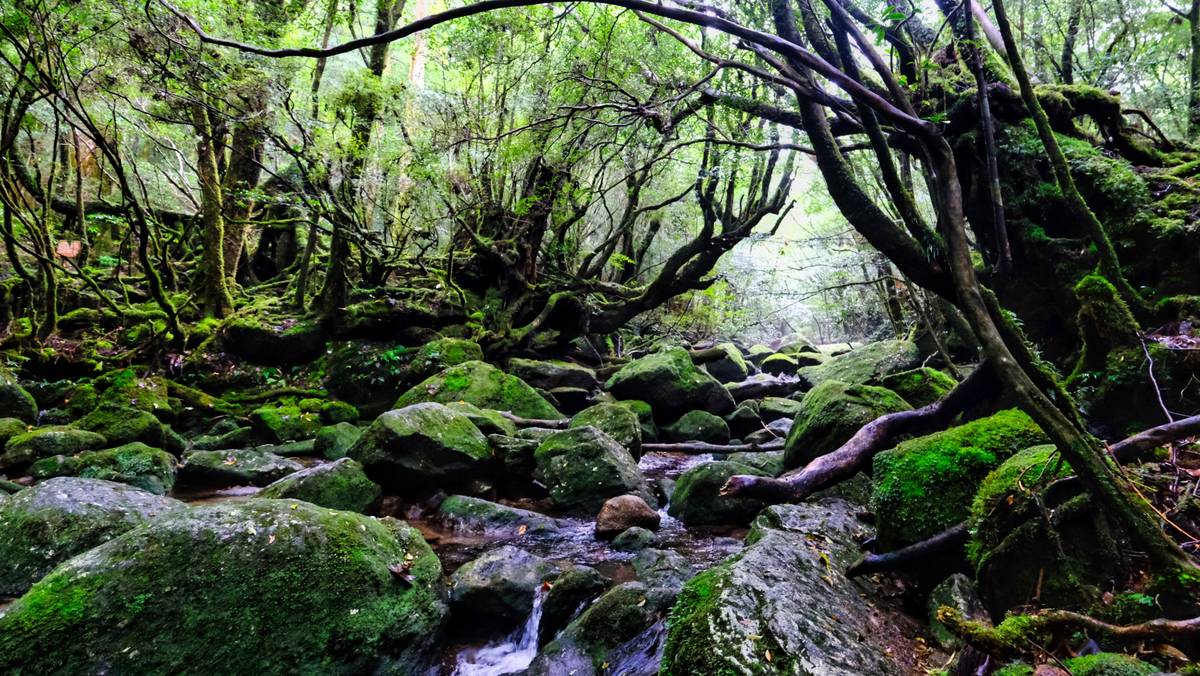
Shiratani Unsuikyo Ravine on Yakushima Island is world-famous as the inspiration for the forest in Studio Ghibli’s masterpiece, Princess Mononoke. The landscape, where ancient Yakusugi cedars thousands of years old are draped in deep green moss, creates a mystical atmosphere as if ancient gods might truly dwell there. This overwhelming natural beauty provided profound inspiration to Director Hayao Miyazaki and continues to draw fans from around the globe to this "sacred site" of animation.
Makoto Shinkai’s Vision: The Skies of Tanegashima
In Director Makoto Shinkai’s acclaimed film 5 Centimeters Per Second, the second chapter, "Cosmonaut," is set primarily on Tanegashima Island. The film beautifully captures the island's stunning sunsets and the awe-inspiring presence of rising rockets with delicate artistry.
Many fans visit the island to experience the world of the film firsthand, as local schools, beaches, and the space center are depicted with striking realism, showcasing a modern cultural charm of Kagoshima.
Japan’s First National Park and World Natural Heritage Site
Kagoshima Prefecture holds two significant "firsts" in the history of Japanese nature conservation. In 1934, the Kirishima area (now Kirishima-Kinkowan National Park) was designated as one of Japan’s first national parks. Furthermore, in 1993, Yakushima made history by becoming one of the first sites in Japan to be registered as a UNESCO World Natural Heritage site. These honors are a testament to the extraordinary biodiversity and the invaluable scenic beauty that Kagoshima offers to the world.
Living with Sakurajima: The "Kokuhai" Spirit & Traditions
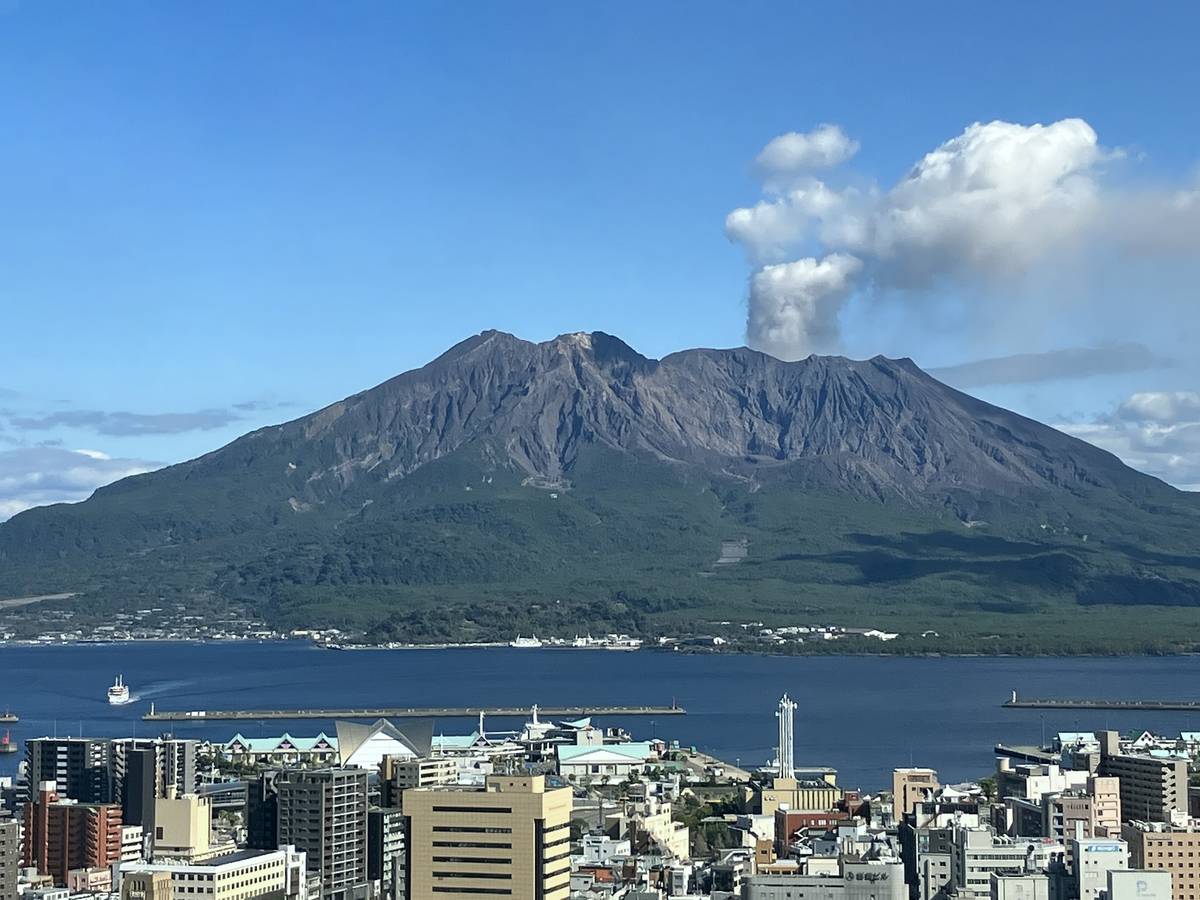
Sakurajima is one of the world's most active volcanoes, located just a few kilometers from a major city of one million residents—a rarity globally. The people of Kagoshima do not view the falling volcanic ash merely as a nuisance; instead, they have developed a unique spirit of coexistence known as Kokuhai (overcoming the ash).
This culture is woven into daily life, from "ash-fall forecasts" included in the weather report to the distribution of special "Kokuhai bags" for ash collection, reflecting the resilience and deep respect the local people have for nature.
Location
Where is Kagoshima?
Kagoshima Prefecture is a region located in the southern part of Kyushu, Japan. It consists of the southern tip of the Kyushu mainland and the Satsunan Islands, and it borders Miyazaki Prefecture and Kumamoto Prefecture to the north. Surrounded by the East China Sea and the Pacific Ocean, it is a maritime region characterized by a warm climate.
The prefecture is home to many active volcanoes, such as Sakurajima and Kirishima Mountain, and numerous hot spring areas can be found due to volcanic activity. The climate is close to a subtropical climate, being warm throughout the year with abundant rainfall. Summers are particularly hot and humid, while winters are mild compared to Honshu, although strong seasonal winds occasionally blow.
Including remote islands such as the Amami Islands, Kagoshima Prefecture stretches long from north to south, resulting in diverse climates across regions. The distance from the southernmost point, Cape Sata, to Hokkaido is about 2,000 km, making it a place where one can truly feel the north-south expanse of Japan.
Loading map...
Access
Getting to Kagoshima
Traveling to Kagoshima is easy, with a wide range of transportation options available, including the shinkansen, flights, and ferries.
The mainstay of land travel is the Kyushu Shinkansen. It takes about 4 hours from Shin-Osaka and about 7 hours from Tokyo to reach the terminal station, Kagoshima-Chuo Station. Within the prefecture, there are Shinkansen stops such as Izumi and Sendai, providing smooth access to the northern part of the prefecture.
If you prefer air travel, Kagoshima Airport in Kirishima City serves as the gateway. It offers direct flights from major domestic cities like Tokyo, Osaka, and Nagoya, as well as from various Asian countries such as Seoul, Shanghai, Taipei, and Hong Kong, attracting many travelers from both domestic and international locations.
Additionally, a sea voyage is a unique attraction of Kagoshima. Ferries operate from Osaka Nanko to Shibushi Port, allowing you to enjoy a leisurely time. From Kagoshima Port, high-speed boats and ferries connect to the World Heritage Yakushima, Tanegashima, and the Amami Islands, serving as a starting point for island journeys.
For sightseeing within the prefecture, JR local lines, route buses, and trams running through Kagoshima City are readily available. Enjoying the scenic views from the window while visiting historical sites is one of the pleasures of sightseeing in Kagoshima.
Local pride
Specialty Products
When discussing the specialties of Kagoshima Prefecture, one cannot overlook the warm climate unique to the southern regions and the unparalleled soil provided by the volcanic areas. In addition to the rich-tasting crops grown in this distinctive environment, the seas benefiting from the Kuroshio Current (warm ocean current that flows northward from the waters east of the Philippines along the Pacific coast of Japan) deliver exceptionally fresh seafood daily. Furthermore, traditional crafts such as Satsuma ware and Oshima Tsumugi, refined over a long history, and authentic shochu, symbolizing the unique sake culture, are not merely products but the crystallization of the artisans' pride and rich sensibility that have been passed down through generations in this region.
Food
Crafts & Others
Through the ages
History of Kagoshima
Kagoshima Prefecture was established in 1871 through the abolition of feudal domains and the establishment of prefectures, integrating the Satsuma and Osumi domains, which were historically governed by the Shimazu clan.
In the late Edo period, it produced great figures such as Saigo Takamori and Okubo Toshimichi, becoming a major driving force behind the Meiji Restoration. After experiencing the military power of the West during the Anglo-Satsuma War in 1863, early embrace of reform positioned Satsuma as a driving force behind Japan’s emergence into the modern era.
However, after the Restoration, conflicts with the new government led to the outbreak of Japan's last civil war, the Satsuma Rebellion, in 1877. It is also the place where Saigo took his own life at Shiroyama, marking the end of the samurai era. Additionally, it has a history as Japan's "gateway to the world," being the site where Xavier landed in 1549, introducing Christianity to Japan.
Plan your trip
Official Resources
Continue exploring
Discover other areas and hidden gems across Kyushu Region.