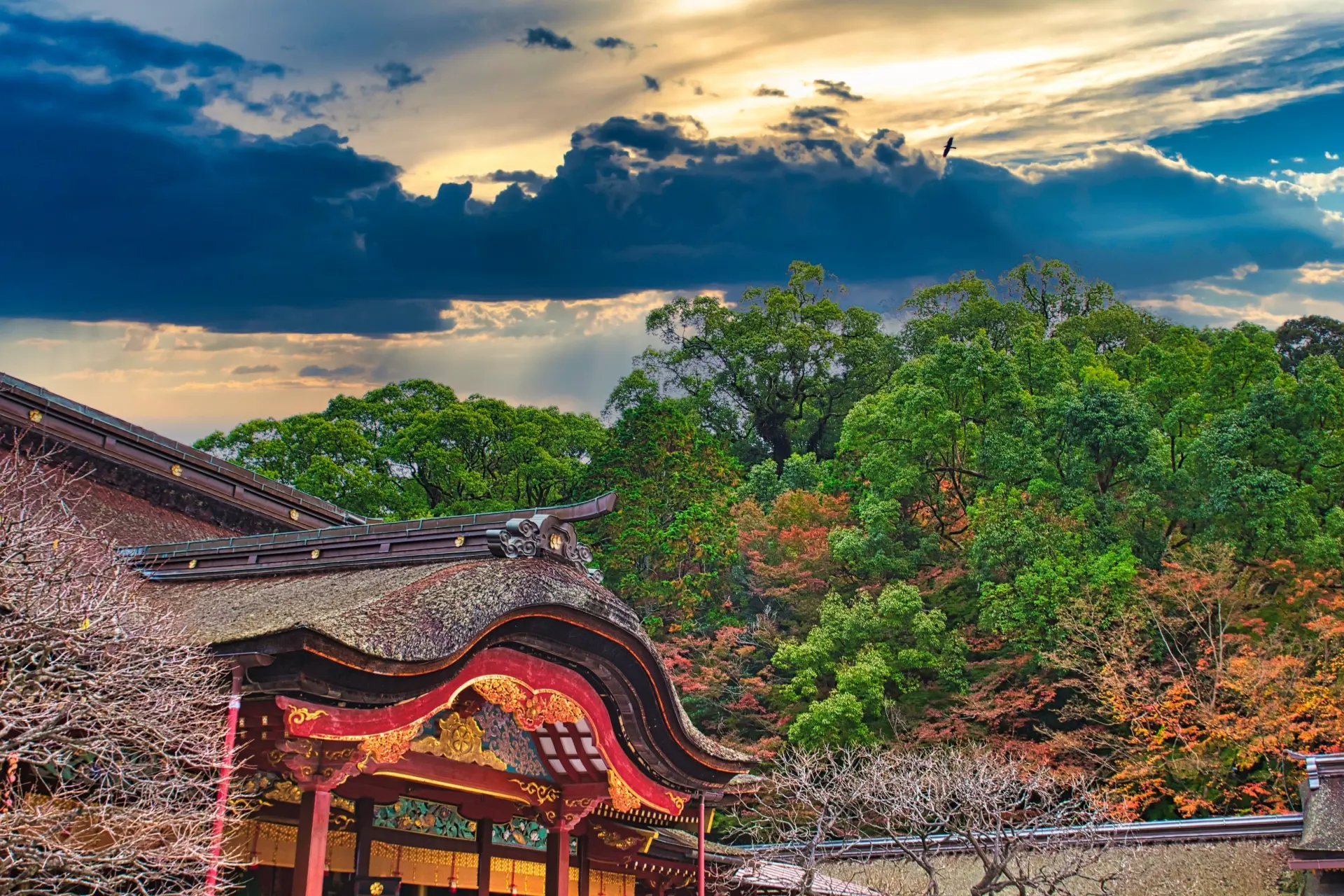
Dazaifu
太宰府市
Things to Do in and Around Dazaifu
Located in the central part of Fukuoka Prefecture, Dazaifu City is a historic area where the ancient government office "Dazaifu," which once administered all of Kyushu, was established. Dazaifu Tenmangu Shrine, dedicated to Sugawara no Michizane, the deity of learning, is bustling with many visitors during the school entrance examination season.
Where is Dazaifu?
Dazaifu City is located in the central‑western part of Fukuoka Prefecture, about 16 km southeast of Fukuoka City. It borders Chikushino City to the north, Umi Town in Kasuya District to the east, and Onojo City to the south. It has good access from central Fukuoka areas such as Hakata and Tenjin, making it an easy place to visit on a day trip. The area is a basin surrounded by mountains such as Mount Shioji and Mount Hōman, and since ancient times it has flourished as an important hub for transportation.


Getting Around
Access to Dazaifu City from within Fukuoka City is convenient by Nishitetsu railway. From Nishitetsu Fukuoka (Tenjin) Station, transfer to the Nishitetsu Dazaifu Line, and you will arrive at Dazaifu Station in about 30 minutes. From Hakata Station, Nishitetsu buses also operate, allowing you to reach Dazaifu without transfers. For getting around within the city, walking and the community bus “Mahoroba-go” are useful. Major spots such as Dazaifu Tenmangu Shrine and the Kyushu National Museum are within walking distance from the station, making it a convenient area where you can enjoy sightseeing while strolling around.
Loading map...
About Dazaifu
God of Learning and Famous Plum Blossoms
When people think of Dazaifu City, the first thing that comes to mind is Dazaifu Tenmangu Shrine. Dedicated to Sugawara no Michizane, revered as the god of learning, this shrine welcomes around 10 million worshippers every year. During the entrance exam season in particular, students and their families flock here from all over Japan to pray for success, filling the shrine grounds with a lively atmosphere.
Because Michizane composed the poem, “東風(こち)吹かば 匂ひおこせよ 梅の花 あるじなしとて春を忘るな (*),” about 6,000 plum trees have been planted within the shrine precincts. From February to March, when the plum blossoms are at their best, white and pink flowers bloom in profusion, and a sweet fragrance drifts through the air.
*Modern translation: “If the spring breeze blows from the east, O plum blossoms, send me your fragrance. Do not forget the spring just because I, your master, am no longer here.”
The Classic Approach-Street Treat: Umegae Mochi

Umegae Mochi / Photo AC
Walking along the approach to Dazaifu Tenmangu, you will notice a toasty aroma wafting from all directions. This is “Umegae Mochi,” a simple sweet made by wrapping sweet red bean paste in a thin layer of rice cake dough and grilling it on an iron plate stamped with a plum blossom motif.
According to legend, when Michizane was demoted and sent to Dazaifu, a local old woman offered him rice cakes attached to a plum branch, which is said to be the origin of the name. Dozens of shops line the approach, each offering its own subtly different flavor. Strolling along the street while biting into a freshly grilled Umegae Mochi is one of the true pleasures of sightseeing in Dazaifu.
Center of Ancient Japanese Politics and Diplomacy
The place name “Dazaifu” comes from the “Dazaifu,” an ancient government office that once stood here. From the 7th to the 12th century, it served as an important base that governed the whole of Kyushu and handled diplomacy and trade with China and the Korean Peninsula. It was, so to speak, the “capital of the west” in ancient Japan.
At the Dazaifu Government Office Ruins, the foundation stones of the buildings remain, and the vast grounds allow visitors to imagine the prosperity of the past. At the Kyushu National Museum, you can see valuable cultural properties that illustrate the history of exchanges with Asia up close, making it an irresistible spot for history enthusiasts.
A Meeting with Contemporary Architecture
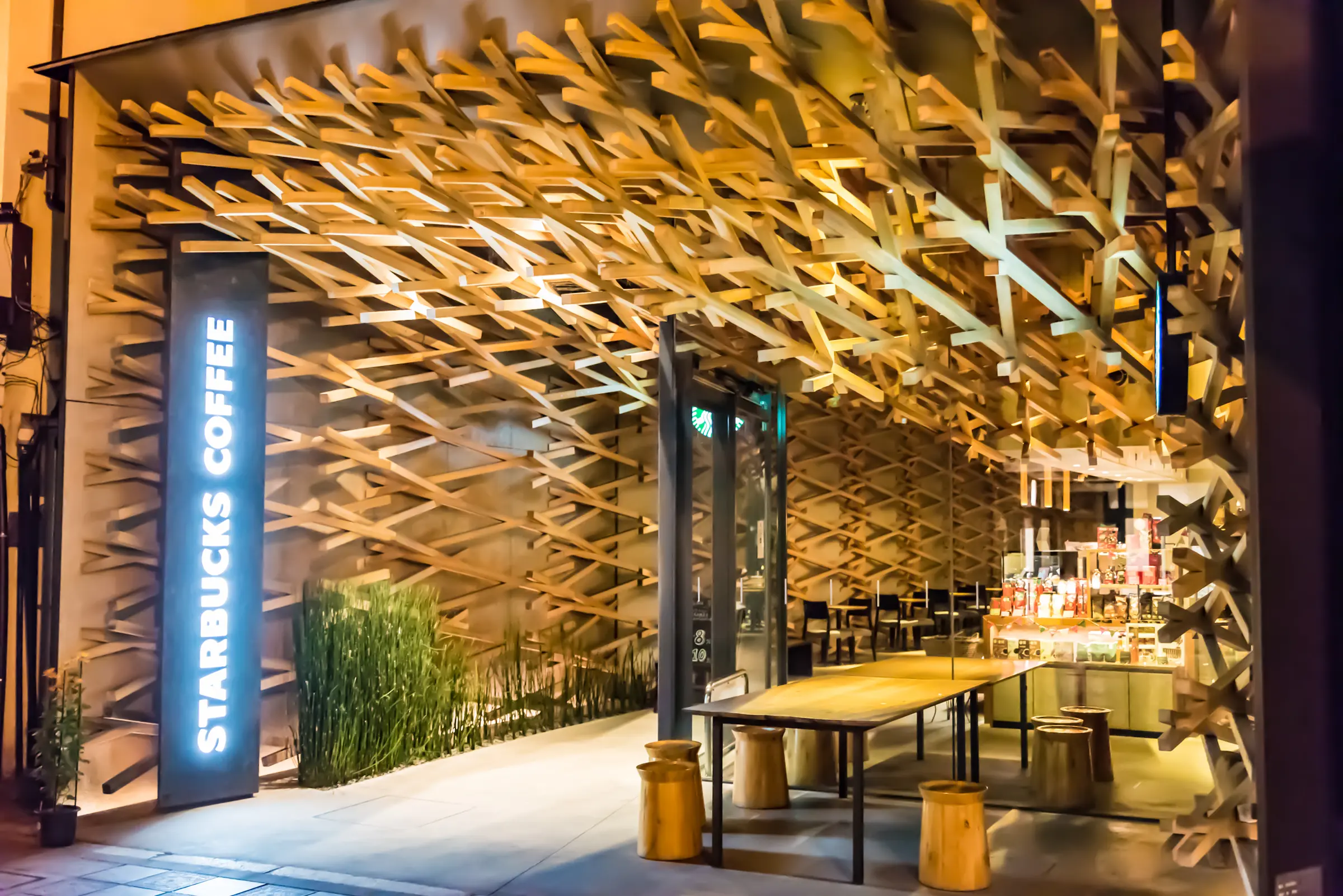
Starbucks Coffee shop in Dazaifu / Pixta
Amid the historic townscape, you can also encounter masterpieces of contemporary architecture. The Starbucks located on the approach to Dazaifu Tenmangu is famous as a store designed by architect Kengo Kuma. Its distinctive design, created by interweaving about 2,000 wooden members, is a modern interpretation of traditional Japanese wooden joinery techniques. It offers a luxurious space where you can savor both coffee and architectural beauty.